Yellowstone Alert: substantial evidence of earthquakes

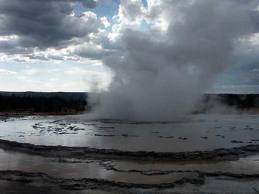
yellowstone geyser


** flash ** indications of severe earthquake / eruption at yellowstone national park

*** FLASH *** INDICATIONS OF SEVERE EARTHQUAKE / ERUPTION AT YELLOWSTONE NATIONAL PARK 
Sunday, 02 February 2014 05:06 

— (TRN) — A seismometer inside a borehole at Yellowstone National Park has begun reporting staggering underground activity near the southwest corner of Yellowstone Lake, possibly signaling the beginning of an eruption of the Super Volcano at the Yellowstone National Park. TRN has obtained the image of the Seismograph report and now YOU can see it for yourself! This could be very nasty. . .

Yellowstone lake is pretty much the center of what is the Yellowstone Caldera; the mouth of a massive Super Volcano, located beneath the park.

The activity began around 12:00 Noon, Mountain Standard Time (MST) on February 1, and was detected by a seismometer in Borehole B944 then continued, non-stop, all day yesterday getting worse and worse as the hours wore on. The activity is continuing right now at 6:06 EST AM as this news article is being produced.

The map below shows the location of Borehole B944 in relation to Yellowstone Lake and the rest of the park.

The readings being reported from seismometer inside Bore Hole #B944 are literally « off-the-scale. » Is an earthquake brewing, or is this the beginning of a catastrophic eruption of the Yellowstone « Super Volcano? »

Seismographic Printout from Yellowstone National Park, Bore Hole #B944, for February 1, 2014. The time stamp goes down the left edge. Look at what starts happening from 12:00 Noon for the rest of the day. By 3:00 PM MST, things get real dicey; by 5:00, it is clear there’s real trouble happening underground. By 7:00 PM, the seismographic gear is totally overwhelmed; with all readings going utterly off the scale. This could be a sign that a massive eruption of the Yellowstone Super Volcano has begun deep underground.

CLICK IMAGE TWICE TO VIEW FULL SIZE

A second printout shows the activity continuing to this very moment, so severely that the seismometer printer is RUNNING OUT OF BLUE, BLACK AND GREEN INK!

Here is the activity from Midnight MST to 4:30 AM, MST (5:30 AM EST)

CLICK IMAGE TWICE TO VIEW FULL SIZE

PERSPECTIVE ON THE ENORMITY OF YELLOWSTONE

To help readers understand the implications of what is taking place, we first show the enormity of Yellowstone National «  »PARK » with stats from the US National Park Service:

•Yellowstone was the world’s first National Park
•A designated World Heritage Site and designated Biosphere Reserve
•3,472 square miles or 8,987 square km
•2,221,766 acres or 898,317 hectares
•63 air miles north to south (102 km)
•54 air miles east to west 87 km)
•96 % in Wyoming
•3 % in Montana
•1 % in Idaho
•Highest Point: 11,358 ft / 3,462 m (Eagle Peak)
•Lowest Point: 5,282 ft / 1,610 m (Reese Creek)
•Larger than Rhode Island and Delaware combined
•About one-quarter the size of Switzerland and about 65% the size of Montenegro

•Approximately 5% of park is covered by water; 15% is grassland; and 80% is forest
•Precipitation ranges from 10 inches (26 cm) at the north boundary to 80 inches (205 cm) in the southwest corner
•Temperatures (average) at Mammoth: January: 9° F/-13 C in 
July: 80° F/27 C 
•Records:
High: 99°F/37 C, 2002 (Mammoth)
Low Temp: -66° F/-54 C (West Entrance, Riverside Station 1933)
Here’s a map of Yellowstone:

Here is a Topographical map showing the mouth (« Caldera ») of the Super Volcano and the scarred, treacherous terrain, created by past eruptions. (Click Image to enlarge). The park boundaries are the thin Yellow line, the Caldera of the super volcano is shown by the thin Red line. Bear in mind that seismometer B944 is just next to the area labeled ‘West Thumb » on the map, showing the western edge of Yellowstone Lake. That puts this seismic activity right smack in the active zone of the actual caldera.

A recent program aired by the British Broadcasting Corporation (BBC) *** THEORIZED *** what an eruption of Yellowstone would affect. Below is the *** THEORETICAL *** blast, damage and volcanic ash fallout area, which is shown in various shades of Orange.

(This image does NOT reflect an ongoing eruption — it is not real)

If this is the start of an eruption at Yellowstone, the entire northwest quadrant of the country could be affected by damage and disruption beyond human comprehension.

We will monitor this story closely.
http://www.turnerradionetwork.com/news/252-pat


Crise Économique Mondiale: un trou de 1000 milliards de dollars aux banques européennes

Euros 001


Après HSBC puis la Deutsche Bank, voici qu’une étude publiée par Bloomberg, l’une des agences de presse économiques les plus sérieuses de la planète, démontre qu’il ne manque pas moins de 1 000 milliards de dollars de capitaux propres aux banques européennes, ce qui, vous en conviendrez, est tout de même une somme relativement importante et conséquente. À titre de comparaison, cela représente 50 % du PIB français, ou encore la totalité des fonds mis dans le MES (ou censés être mis par les Européens) doté d’environ 700 milliards d’euros.

Les banques européennes sont confrontées à un trou de 1 000 milliards de dollars


Je vous traduis ici l’essentiel de la dépêche Bloomberg dont vous trouverez le lien en annexe ci-dessous avec quelques remarques personnelles évidemment…


« Les banques européennes ont un déficit en capitaux propres estimé à 767 milliards d’euros (ce qui équivaut avec le taux de change actuel à environ 1000 milliard de dollars) alors que la Banque centrale européenne devrait prochainement procéder aux désormais très célèbres stress tests (censés mesurer la solidité des banques et concluant à chaque fois que le système bancaire européen est trèèèèès solide). »


Comme chacun le sait, le sinistre de l’Économie, phare dans la tempête de sa copine de 25 ans, veille sur la sécurité du système bancaire français et sur l’intérêt du petit peuple (les manants)… et dans la catégorie loser, le winner est… la France !! « Ce sont les banques françaises qui montrent le plus grand écart avec 285 milliards d’euros »… Oups… 285 milliards d’euros, vous savez, cela commence à faire un sacré paquet de sous du genre environ 4 300 euros par français (sur la base de 65 millions), je vous laisse multiplier pour savoir combien cela représente pour une famille de 4 personnes.
Soit dit en passant, une petite ponction de 10 % de votre épargne permettrait de bien vite remettre du baume au cœur de nos gentils banquiers en renflouant au bon moment leurs petites caisses bien vides.


Le deuxième nominé est évidemment ce pays dont nous voulons absolumment imiter la moindre décision, j’entends par là l’Allemagne ! Pour eux, le trou s’élève à 199 milliards d’euros. Vous remarquerez quand même que ce sont presque 100 milliards de trou en moins que pour nous, cela dit je soupçonne que les chiffres concernant l’Allemagne ne prennent pas suffisamment en compte l’état déplorable des comptes de la Deutsche Bank.


D’ailleurs, les auteurs de l’étude pointent les risques particulièrement élevés parmi les banques allemandes publiques ou Landesbanken. « En Allemagne, de nombreuses institutions d’État peuvent nécessiter des émissions de capital ou cautions », écrivent-ils. Sans blague ! Moi qui croyais que la crise était finie et que le pire était derrière nous… D’ailleurs, petite question à Moscovenividivessie, dis-moi mon ami Pierrot, as-tu envoyé un fax à François pour le prévenir entre deux de ses galipettes que la crise pourrait bien nous repasser devant ? Si ce n’est pas le cas, je peux te prêter ma plume, pour lui envoyer un mot. Ça serait bien qu’il soit au courant pour sa prochaine conférence de presse, cela lui éviterait de passer pour un benêt-béat plus qu’il ne l’est…


Ensuite, nous trouvons les banques espagnoles (penser à envoyer là aussi un mail à Rajoy pour le prévenir qu’il est beaucoup plus mal que ce que ses conseillers lui disent de dire), avec un modeste 92 milliards d’euros. Bon, ne soyons pas dupes. 92 milliards d’euros, c’est la note juste pour payer les pertes liées aux crédits immobiliers de l’année en cours, et j’ai comme la très désagréable impression que l’année prochaine il en faudra sensiblement autant. Disons que vu le nombre d’Espagnols sans emploi et que les créances douteuses atteignent en 2013 le plus haut historique et que ce n’est pas la folle croissance économique débridée de Madrid qui va ramener la félicité et le pognon dans tous les ménages ibériques dans les 6 prochains mois, les banques du coin risquent fort de ne pas aller vraiment mieux l’année prochaine… mais je ne suis pas com-pétent moi.


Enfin, les banques italiennes, dont quelques-unes nous ont fait de bien belles faillites cette année ce qui les fait sortir du classement (mais ne rembourse pas les trous ni les dettes pour autant), sont dans une situation de manque estimée à 45 tout petits milliards d’euros…


Tiens, c’est marrant, il nous manque la Grèce, le Portugal et encore quelques autres, mais chut ! la note étant déjà de 1 000 milliards de dollars, on ne va pas pinailler pour 200 ou 300 milliards de plus, il suffira juste de faire passer la ponction obligatoire sur les comptes de 10 % à 15 % et puis histoire d’avoir un peu de marge, on prendra 20 %. De toute façon, vous n’aurez pas le choix ! Tonte obligatoire. On va bien rigoler quand le mouton va se réveiller pendant la tonte ! Maiiiiis heuuuuuuu, pourquoi tu me tonds ? Ze croyais que la krise, elle était finie…. Hahahahaa. Je sais, c’est cruel, mais que voulez-vous… ce n’est pas comme si je répétais inlassablement avec quelques autres que tout cela va très mal finir et en particulier avec la ruine des épargnants et qu’il faut s’y préparer…

D’ailleurs, j’adore la fin de cette étude et de cette dépêche :


« Nos résultats suggèrent que, avec émission d’actions ordinaires et les coupes de cheveux sur les créanciers subordonnés, il devrait être possible de traiter les besoins en capital de nombreuses banques. »


Alors là, je vous traduis ce petit jargon de financier pour que cela soit plus compréhensible : il va être possible de traiter les besoins en capital de ces nombreuses banques en ruinant les détenteurs d’obligations et les actionnaires et en allant directement se servir sur les comptes des clients »… C’est plus clair là, non ?


Et la dépêche de conclure avec une mention spéciale pour les banques belges, chypriotes et grecques !!


Justement, à propos de traduction des intentions de nos mamamouchis dont le seul et unique objectif est de sauver les banques à tout prix y compris au risque de ruiner les peuples, une autre nouvelle est tombée, mais juste une petite remarque en passant.


Pourquoi faut-il sauver les banques ? Parce que ne pas le faire signifierait la ruine des peuples. Ha, bon, ben d’accord, c’est dans mon intérêt alors et comment fait-on pour sauver les banques alors ? Eh bien il faut ruiner les peuples pour renflouer les banques… donc pour résumer, et si je comprends bien, pour éviter que je sois ruiné, il faut me ruiner… En clair, je suis ruiné dans tous les cas, sauf que quitte à être ruiné… pourquoi les banques devraient-elles être sauvées ? Parce que, économiquement, sauver les banques en sacrifiant les épargnants n’est pas une meilleure idée que de ne sauver ni les banques… ni les épargnants, car en laissant le système faire faillite, on condamnerait les banques et l’on serait dès lors en mesure de redéfinir un nouveau système beaucoup plus sain et beaucoup plus libre.


Nous n’en ferons rien bien entendu puisque, de toutes les façons, la réalité c’est que ce sont les financiers et les banquiers qui dirigent le monde. Pierrot et François ne sont rien du tout. Toutes les lois, tous les règlements sont actuellement écrits dans l’optique non pas de sauver les peuples mais les banquiers, et pour réussir ce sauvetage du lobby bancaire, des peuples entiers seront ruinés.

L’UE travaille sur une directive qui limitera les retraits d’argent des clients de banques en faillite à 100 ou 200 euros par jour


C’est article de L’Express en Belgique qui nous apprend que les gentils gouvernements européens, qui vous veulent que du bien, surtout à votre argent, « travaillent à un compromis sur la directive de l’UE pour le paiement de la garantie des dépôts des clients lors de faillites bancaires. Un document de travail de la présidence de l’UE, qui est assurée depuis le 1er Juillet par la Lituanie, montre que la directive pourrait être prête dès cette année ».


Vous voyez, lorsque les mamamouchis font quelque chose c’est toujours bien présenté. C’est beau, c’est bien enveloppé et l’emballage donne envie. En l’occurrence, la loi en question va s’intituler quelque chose comme « paiement de la garantie des dépôts » !! Ha, voilà une bonne nouvelle pour le mouton d’en bas ! On va être payé en cas de problème ! Voilà ce qu’il se dit.


Et puis incidemment, nous apprenons que, dans cette directive écrite pour vous, mes braves crétins, heu moutons, heu épargnants… que l’Europe examine maintenant aussi la possibilité de qualifier cette période de «circonstances exceptionnelles». Pendant cette période, les citoyens pourraient effectuer quotidiennement des retraits d’argent de 100 à 200 euros maximum, comme ce fut le cas à Chypre. Ce sont les vilains journalistes du journal allemandBörsen-Zeitung qui ont vendu la mèche !

Il faut donc retenir :


1/ Quoi que l’on vous raconte, c’est faux, et les banques sont de véritables bombes à retardement. Donc elles vont faire faillite et il faudra les sauver. Pour les sauver, il faudra ruiner les épargnants. Pour que le mouton soit bien tondu, on doit empêcher sa fuite. Donc il ne faut pas l’effrayer le temps que le cadre juridique de la tonte soit mis en place.


2/ L’organisation des modalités de la tonte est presque achevée. Il ne manque plus que cette directive qui permettra ni plus ni moins que de rationner vos retraits le temps que l’on vous fasse les poches.


3/ Concrètement, les banques seront fermées, vos comptes bloqués. Afin que vous puissiez juste acheter de quoi manger, vous aurez droit à 100 ou 200 euros… Bref, pas de quoi vider votre compte de son épargne… qui restera pleinement disponible pour le plus grand bien de votre banquier qui ira renflouer son compte en vidant le vôtre.


Voilà comment s’organise, en parfaite transparence car nous avons à notre disposition toute l’information nécessaire, le plus grand hold-up à venir.


Si une banque comme BNP Paribas, ou comme le Crédit Agricole venait à tomber, je vous laisse imaginer l’état de notre économie par la suite. Épargnants ruinés, récession majeure, entreprises toutes en dépôts de bilan, chômage massif, etc., et ce ne sont là que quelques-unes des conséquences les plus évidentes.

Conclusion


Plan épargne boîte de conserve pour manger lorsque tout sera rationné y compris l’argent et les retraits (PEBC).


Or et argent métal pour stocker votre patrimoine loin des banques et hors système financier afin d’éviter le chyprage de votre épargne ou de le rendre en tous cas plus difficile.


Pour les plus gros patrimoines, on diversifie avec des actifs tangibles plus larges, du type terres agricoles, forêt, diamants ou vins !


Enfin, pour ceux qui veulent se préparer à devenir véritablement résistants dans tous les sens du terme, alors investissez dans une maison à la campagne, dans un jardin et dans un potager. Cheminée et poêle à bois, récupérateur d’eau de pluie, ou puits, bref, soyez autonome, devenez autonome.


La stratégie de préparation patrimoniale est toujours la même, simplement le jour approche où vous allez vous en mordre les doigts de ne pas l’avoir mise en œuvre et d’avoir attendu sidéré, en vous disant mais non, ce n’est pas possible… quand même, ils vont bien trouver une solution ! Mais ils l’ont trouvée LA solution, et c’est votre argent… tout simplement et ils vont vous le braquer.

Sources: Économie-Matin.fr

 

Le mystère des trovants, les « pierres vivantes » de Roumanie

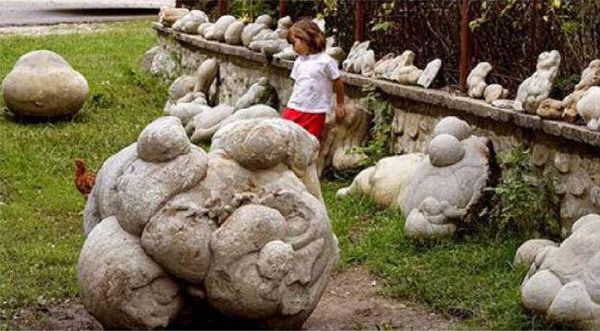
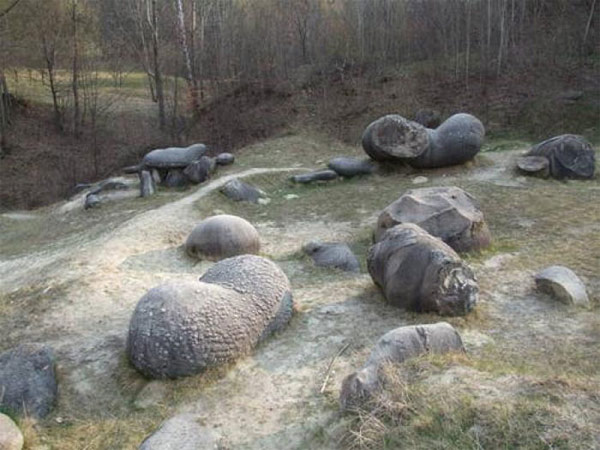
Dans le sud et le centre de la Roumanie loin des villes, on trouve des pierres bien surprenantes.

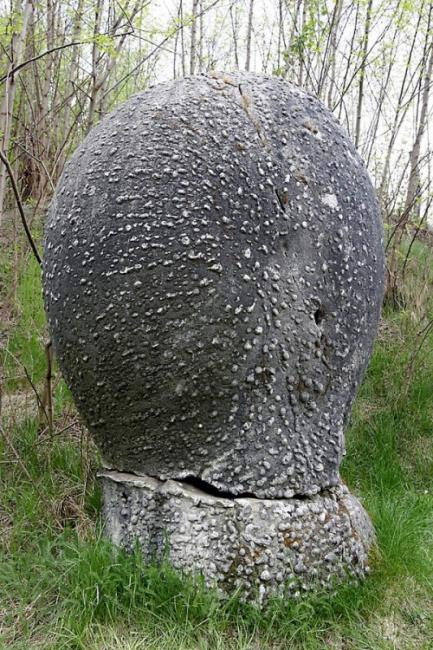
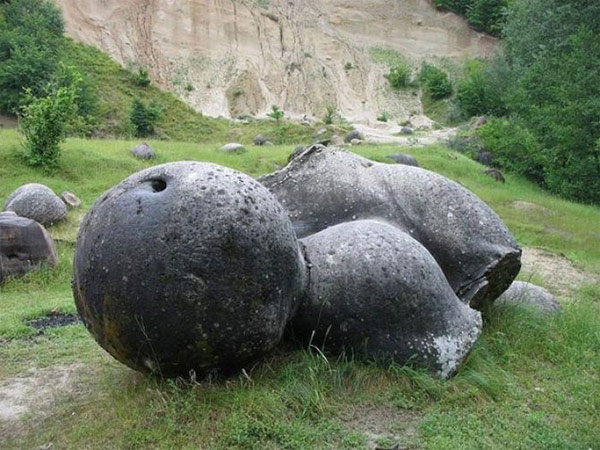
Les autochtones les appelles les trovants. Ces pierres sont capables non seulement de grossir mais aussi de se multiplier !

Dans le département de Valcea il y a 2 endroits ou on trouve ce type de pierres, mais le plus connu est le Musée en plein air de Costesti. Cette commune se trouve a environs 40 Km de Rm. Valcea (la capitale du département), sur la route vers Tg. Jiu. Le lieu a été déclaré réserve naturelle depuis 2005.

trovant1


trovant2


trovant3


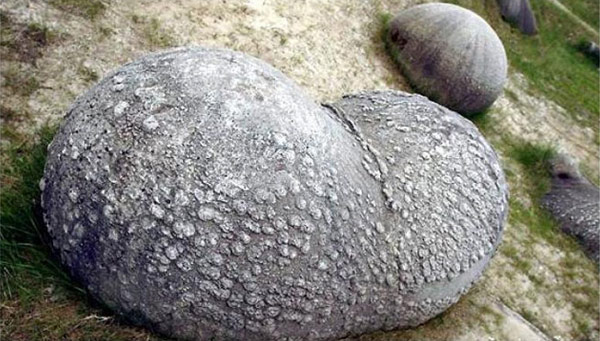
Il est impossible de les conserver fendues en morceaux. Elles peuvent êtres sectionnée mais finissent toujours par s’arrondir. Dans ces régions, il y a certes beaucoup de différentes pierres qui sont également très grosses et se distinguent en apparence peu de ces pierres mystérieuses sauf que celles ci ont une particularité : lorsqu’il pleut elles se mettent à grossir comme si elles étaient vivantes !

Un trovant de quelques grammes peut devenir gigantesque et atteindre près d’une tonne ! Ce sont les pierres jeunes qui grandissent le plus vite et avec l’age cette particularité tend à s’atténuer.


trovant4


Lorsqu’on les sectionnent on peut voir apparaitre comme sur un tronc d’arbre les cercles concentriques semblant indiquer leur âge.


trovant5


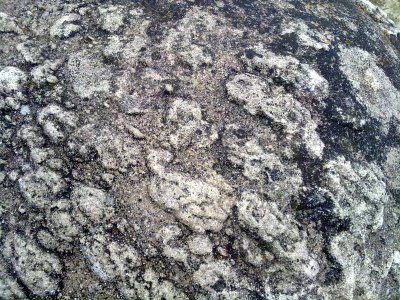
Ce qui est étrange, c’est que 30 ou 40 minutes après une pluie, le sable humide commence à présenter de nouveaux petits éléments en formation, semblables aux pierres environnantes, phénomène qui fait penser à une « multiplication » ou à une « croissance ».

à la surface de ces pierres apparaissent des petites boursouflures qui se cassent et tombant à terre se multiplient.


trovant6


Les trovants sont assurément une des plus grandes curiosités pour les touristes visitant la Roumanie.

Quoiqu’il en soit le mystère demeure intacte, on dit, par exemple que les trovants représentent une forme intermédiaire entre le minéral et le végétal.

Source : http://www.fresher.ru/2012/05/15/zhivye-kamni/

http://geocer.wordpress.com/2010/07/13/les-trovants-des-pierres-etranges/

http://voyages.ideoz.fr/carpates-ouest-pays-moti-monts-apuseni-roumanie-tourisme-nature/


500% Radiation Increase from Red-Painted Disposable Eating Utensils? Seriously?


After independent reports of radiation levels skyrocketing on the beach in California and doubling from snowfall, officials reproduced the results but dismissed any link to Fukushima and suggested “red-painted disposable eating utensils” were the likely cause. Seriously?

Radiation West Coast

A video and audiobook in hommage to Benjamin Franklin

I am proud to present you today ,a great work we doing  on the autobiography of Benjamin Franklin…in 6 parts .

We simply produce a videio  from a great audibook created with art.

Please share with your friends…!


Please  support our  You tube network!

Notes and researches about the Yellowstone supervolcano

Au-début de l'hiver 2012, la webcam face au Mammouth Terrace indique 44 degrés Celsius.
October 20,2012…the webcam face to the terrace Spring Mammouth indicated 44 caelsius degres.


What is a super volcano?

A super volcano is the most destructive force on this planet. Only a few exist in the world and when they erupt they do so with a force tens of thousands of times greater than other eruptions. They lie dormant for hundreds of thousands of years as a vast reservoir of magma builds up inside them before finally they unleash their apocalyptic force, capable of obliterating continents. They threaten the survival of  actual mankind.

Comparaison entre diverses éruptions volcaniques.Remarquez que le mont St-Helens ressemble à un nain au côté de Yellowstone.
Many differents eruptions compared .See the Mount St-Helen’s eruption look like a dwarf.


What happened during the last eruption of a super volcano?

The last eruption of a super volcano was in Toba, Sumatra, 75,000 years ago. It had 10,000 times the explosive force of Mount St. Helens and changed life on Earth forever. Thousands of cubic kilometres of ash was thrown into the atmosphere – so much that it blocked out light from the sun all over the world. 2,500 miles away 35 centimetres of ash coated the ground. Global temperatures plummeted by 21 degrees. The rain would have been so poisoned by the gasses that it would have turned black and strongly acidic. Man was pushed to the edge of extinction, the population forced down to just a couple of thousand. Three quarters of all plants in the northern hemisphere were killed.

What causes super volcanoes?
Super volcanoes differ from normal volcanoes in many ways. The stereotypical volcano is a towering cone, but super volcanoes form in depressions in the ground called calderas. When a normal volcano erupts lava gradually builds up in the mountain before releasing it. In super volcanoes when magma nears the surface it does not reach it, instead it begins to fill massive underground reservoirs. The magma melts the nearby rock to form more extremely thick magma. The magma is so viscous that volcanic gasses that normally trigger an eruption cannot pass, so a massive amount of pressure begins to build up. This continues for hundreds of thousands of years until an eruption occurs, which blasts away a huge amount of ground, forming a new caldera.


Depuis 680,000 ans ,l'ensemble de la surface de la grande caldeira est en remontée.Depuis quelques années,la pression a considérablement augmentée et l'élévation s'accélère.

Since 680,000 years , the whole surface of the lift is large caldera.
In recent years, the pressure has increased considerably and the rise is accelerating.

Where are there other super volcanoes?

Not all super volcanoes have been found, but one of the largest is in Yellowstone Park, USA. Scientists searching for the caldera in the park could not see it because it was so huge – only when satellite images were taken did the scale of the caldera become apparent – the whole park, 85km by 45km, is one massive reservoir of magma. The idyll landscpae of Yellowstone (below) could soon explode with devastating consequences.

When will it next erupt?

Scientist have discovered that the ground in Yellowstone if 74cm higher than in was in 1923 – indicating a massive swelling underneath the park. The reservoir is filling with magma at an alarming rate. The volcano erupts with a near-clockwork cycle of every 600,000 years. The last eruption was more than 640,000 years ago – we are overdue for annihilation.

What would be the effect of an eruption?

Immediately before the eruption, there would be large earthquakes in the Yellowstone region. The ground would swell further with most of Yellowstone being uplifted. One earthquake would finally break the layer of rock that holds the magma in – and all the pressure the Earth can build up in 640,000 years would be unleashed in a cataclysmic event.

Magma would be flung 50 kilometres into the atmosphere. Within a thousand kilometres virtually all life would be killed by falling ash, lava flows and the sheer explosive force of the eruption. Volcanic ash would coat places as far away as Iowa and the Gulf of Mexico. One thousand cubic kilometres of lava would pour out of the volcano, enough to coat the whole of the USA with a layer 5 inches thick. The explosion would have a force 2,500 times that of Mount St. Helens. It would be the loudest noise heard by man for 75,000 years, the time of the last super volcano eruption. Within minutes of the eruption tens of thousands would be dead.

Représentation de l'éruption de Toba.
Toba eruption representation.

The long-term effects would be even more devastating. The thousands of cubic kilometres of ash that would shoot into the atmosphere could block out light from the sun, making global temperatures plummet. This is called a nuclear winter. As during the Sumatra eruption a large percentage of the world’s plant life would be killed by the ash and drop in temperature. Also, virtually the entire of the grain harvest of the Great Plains would disappear in hours, as it would be coated in ash. Similar effects around the world would cause massive food shortages. If the temperatures plummet by the 21 degrees they did after the Sumatra eruption the Yellowstone super volcano eruption could truly be an extinction level event.


Autre comparaison  entre plusieurs éruptions.
Other comparaisons  inter many eruptions.


Other articles on the same subject:


http://atomic-temporary-14961841.wpcomstaging.com/2013/11/19/yellowstone-alert-countdown-to-the-apocalypse-is-engaged/


Scandal Fukushima: TEPCO receives a masterful help while the victims wait for few

une catastrophe est en cours actuellement: les médias restent muets!


Here officially that the Japanese government has decided to help TEPCO and the Japanese people :

Committees disaster recovery Liberal Democratic Party in power ( PLD) and its coalition partner , New Komeito , presented a recovery plan in Fukushima Prime Minister Shinzo Abe on November 11, 2013, which suggests that the government change his plans for Fukushima evacuees to return home .

The plan, which aims to accelerate the recovery work around the crippled Fukushima No. 1 nuclear power plant , was presented by Tadamori Oshima, former vice president of the LDP and New Komeito Secretary General Yoshihisa Inoue, who both head the task in their respective parties ‘ forces and on restoring Fukushima.

The plan proposes a system of financial support for residents near the Fukushima plant to relocate , and also government spending to manage the temporary storage of radioactive waste. The move represents a departure from the policy of the government to have an operations manager on site or Tokyo Electric Power Co. (TEPCO ) to take responsibility for all costs, including those to pay compensation to victims decontaminate the affected areas and dismantling the Fukushima reactors (if possible). so we’re looking to blame the disaster, it is more important than the victims.

Eleven municipalities in Fukushima Prefecture are now divided into three zones based on the level of radioactive contamination : the areas where the annual dose exceeds 50 millisieverts whose return is difficult areas of life restrictions are in place (one level annual radiation exceeds 20 millisieverts , but no more than 50 millisieverts ) , and areas that are preparing to lift evacuation orders ( annual radiation levels up to 20 millisieverts ) .

Abe et Tepco

The plan suggests that evacuees receive government support from the first area , including the towns of Futaba and Namie , reinforced with compensation so they can relocate. He stated that the prospect of returning to their hometowns is unrealistic , even in the long term , and some residents began to seek a new life in different places .


Meanwhile, the working groups have suggested that the government prioritize decontamination work in areas where radiation levels are relatively low, and accelerate the reconstruction of medical institutions , and commercial complexes so that the residents of these areas will be able to return sooner.

However, the decontamination work in some areas has been largely unsuccessful . Even in areas that are preparing to lift evacuation orders , the average radiation dose can top the annual permissible level of 1 millisievert per year except that which exists in nature.

Plans to achieve a maximum dose of 1 millisievert per year is considered a  » long term goal  » , since the International Commission on Radiological Protection (ICRP ) states that radiation doses from 1 to 20 millisieverts per year is a  » range. « 

In addition , the task forces suggested that the government pays for the construction of an interim storage facility for waste contaminated with radiation (estimated to cost about 1 billion yen ), and the municipal and national governments perform decontamination , even after the cleaning plane in progress is completed .

As for TEPCO , the working groups have asked the company to be divided into separate companies to manage the decommissioning of the nuclear power plant Fukushima No. 1 .

Abe urged to help TEPCO to restart Fukushima from public funds

TOKYO ( Kyodo ) – Prime Minister Shinzo Abe pledged Monday to speed up the recovery of Fukushima from one of the worst nuclear crises in the world, as it has received a proposal from the ruling parties to ask the government to make a major change of policy on the use of public funds to this end .

Given the proposal, the government should spend the taxpayers’ money to fund a portion of the cleanup of radiation-contaminated outside the Fukushima Daiichi nuclear complex hit areas, therefore finance Tokyo Electric Power Co. to recover its bad management and it avoid bankruptcy.

To carry out the task unprecedented scrapping reactors suffered meltdowns , the proposal also addresses the need for the giant TEPCO have  » a clear organizational structure  » as a new business internally to charge of dismantling . So TEPCO will be able to erase the evidence of its shortcomings , while paying the tax payers .

After receiving the document lawmakers of the Liberal Democratic Party and its coalition ally the New Komeito party , Abe said : « The government will work with the parties in power in the dismantling of the plant and management water radioactive . « 

He also said that the government should « criteria » for those affected by the crisis to help them decide how to put their lives in order.

Recovery of communities affected by the nuclear accident area was low compared to those affected by the terrible earthquake and tsunami in March 2011 areas, but affected by the nuclear crisis that followed.

After massive radiation leaks , more than 140,000 people in the prefecture of Fukushima still living as evacuees and a research institute estimates that the cost of decontamination of areas in the prefecture could reach more than 5 billion yen.


300 tonnes métriques  d'eau  radioactive par jour.
300 tons of radiactive  water link each day.


The ruling parties have said in the proposal that the government should consider playing a role in the decontamination needs to restore infrastructure that could emerge after the current consolidation plans are implemented .

The government should also get funds to build temporary storage facilities to keep the radioactive soil and other waste products in decontamination efforts , they said.

Regarding designated as  » difficult to return to  » for at least six years after the accident because of high radiation level areas, the government should clarify how long it will take before people can return and improve support evacuees who want to leave their homes and start a new life , said the proposal.

The importance of achieving the decommissioning of the Fukushima plant and manage the accumulation of a huge amount of radioactive water was also noted in the proposal as a « fundamental principle  » to achieve the recovery of Fukushima.

But the document says TEPCO alone can not handle difficult tasks. The government should strengthen its control of the issue by reorganizing some of its panels load, while TEPCO should have a clear organizational structure to support the operation of Fukushima, he said.

While calls are among some politicians that the troubled company should be allowed to go bankrupt , an LDP lawmaker said that the document states that the company is already effectively under the control of the state should « take the sudden and hard work.  » So it keeps alive a corrupt , lax and deceptive business … to the public purse !

All this while a continuous radioactive water ( 300 metric tons per day ) volume escape into the Pacific Ocean.

Last year, TEPCO received a capital injection of 1 trillion yen from a rescue fund backed by the State to strengthen its financial position. The Facilitation Fund liability for nuclear damage has also provided more than 3 billion yen in compensation purposes , that TEPCO had urgent need to eventually repay the state.

La nature parle et elle soufre.
The nature talk ..and suffer.


MEANWHILE IN REALITY … on the waterfront

Japanese experts at the nuclear power plant was destroyed by a tsunami in 2011. None mentioned the problems of contamination of water discharged into the ocean.

An  » emergency  » . Still, Fukushima is in a  » state of emergency  » , according to Prime Minister Shinzo Abe . Of highly radioactive water pours off into the ocean from Japan ‘s rugged Central . The Japanese government estimated that each day , approximately 300 tons of contaminated water flowing into the Pacific. And assured that  » instead of trusting Tepco [ the plant operator ] , the government would take action . »

But there, not a word.  » I spoke to told me very little of the sea, but the considerable work done to treat the land , » said Hervé Mariton on Europe 1 .  » There is a program , apparently carried out with efficiency should allow a number of evacuees being occupied by their inhabitants regions, » he added , noting that « the challenge of the sea was quite obscured . « 

The Greenpeace organization provides , for its part, that  » Japanese experts mastered anything, they tinker . » A view shared by not really elected , who believes  » that the situation does not justify pessimism today. »

 There is no one who trusts the government Abe frame the truth to his advantage and diverts public funds to rescue incompetent .