2 years ago, the men of al-Qaeda came to power in Libya

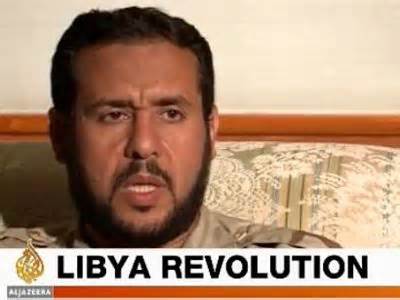
Le chef historique d'Al Qaïda en Lybie.
The Al Qaeda historical leader in Libya.

Historical  Al-Qaeda leader  in Libya, Abdelhakim Belhadj, became military governor of Tripoli « liberated » and was responsible for organizing the army of the « new Libya. »

In the ’80’s, the CIA encouraged Awatha al-Zuwawi to create a pharmacy in Libya to recruit mercenaries and send them to the jihad in Afghanistan against the Soviets. In 1986 the Libyan recruits are trained at Camp Salman al-Farisi (Pakistan), under the authority of anti-Communist billionaire Osama bin Laden.

When bin Laden moved to Sudan, the Libyan jihadists followed him there. They are grouped in their own compound. Since 1994, Osama bin Laden dispatch Libyan jihadists in their country to kill Muammar Gaddafi and reverse the Socialist People’s Libyan.

On 18 October 1995, the group structure under the name Libyan Islamic Fighting Group (LIFG). During the three years that followed, the LIFG tried four times to assassinate Muammar Gaddafi and establish a guerrilla in the southern mountains. Following these operations, the Libyan army, under the command of General Abdel-Fattah Younis leads a campaign to eradicate the guerrillas, and the Libyan Justice issued an arrest warrant against Osama bin Laden, broadcast from 1998 by Interpol.

According to the British counterintelligence agent David Shayler, the development of the LIFG and the first assassination attempt on Gaddafi by Al-Qaida funded to the tune of 100,000 pounds by the British MI6. [1]

At the time, Libya is the only country in the world to find Osama bin Laden, which has yet to officially support policies in the United States although he opposed the « Desert Storm » operation.

Under pressure from Tripoli, Hassan el-Turabi expelled the Libyan jihadists from Sudan. They move their infrastructure to Afghanistan, where they set up camp Shaheed Shaykh Abu Yahya (just north of Kabul). This installation runs until the summer of 2001, when the Berlin negotiations between the United States and the Taliban about the pipeline transafghan fail. At that time, Mullah Omar, who is preparing for the Anglo-Saxon invasion, requires that the camp came under its direct control.

October 6, 2001 the LIFG is on the list established by the application of Resolution 1267 of the Security Council of the United Nations Committee. It is still there. On 8 December 2004, the LIFG is on the list of terrorist organizations by the State Department of the United States. It is still there. On 10 October 2005, the UK Department of the Interior banned the LIFG on its territory. This is still valid. On 7 February 2006, the UN Committee takes sanctions against five members of the LIFG and four companies related to them, which continue to operate with impunity in the territory of the United Kingdom under the protection of MI6.

During the « War against terror », the jihadist movement is organized. The term « Al Qaeda », which initially referred to a large database in which Osama bin Laden chose the mercenaries he needed for specific missions, gradually becomes a small group. Its size decreases and when its structure.

On 6 March 2004, the new head of LIFG, Abdelhakim Belhadj, who fought in Afghanistan alongside Osama bin Laden [2] and Iraq, was arrested in Malaysia and then transferred to a secret CIA prison in Thailand where it is subjected to truth serum and tortured. Following an agreement between the United States and Libya, it is returned to Libya where he was tortured, but by British agents this time in Abu Salim prison.

On 26 June 2005, Western intelligence services organized a meeting in London of Libyan dissidents. They are the « National Conference of the Libyan opposition » by uniting three Islamic factions: the Muslim Brotherhood, the Brotherhood of Senoussi and the LIFG. Their manifesto three objectives:
– Overthrow Muammar Gaddafi;
– Exercise power for one year (under the name « National Transitional Council »);
– Restore the constitutional monarchy in 1951 form and make Islam the state religion.

In July 2005, Abu al-Laith al-Liby managed against all odds to escape from the high security prison in Bagram (Afghanistan) and became one of the leaders of al-Qaida. He calls the LIFG jihadists who have not yet done so to join Al-Qaida in Iraq. Libyans become the majority among the Al-Qaeda suicide bombers in Iraq. [3] In February 2007, al-Liby led a spectacular attack against the Bagram base while Vice President Dick Cheney is about to visit. In November 2007, Ayman al-Zawahiri and Abu al-Laith al-Liby announced LIFG’s merger with Al Qaeda.

Abu al-Laith al-Liby became deputy Ayman al-Zawahiri, and as the number two of Al Qaeda since there is no news of Osama bin Laden. He was killed by a CIA drone in Waziristan in late January 2008.

During the period 2008-2010, Saif al-Islam Gaddafi is negotiating a truce between the Libyan and the LIFG. It published a long paper Corrective Studies, in which he admits to having made a mistake in calling for jihad against fellow Muslims in a Muslim country. In three waves, all members of Al Qaeda are pardoned and released on the condition that they renounce violence in writing. On 1800 jihadists, over one hundred refused this agreement and prefers to stay in jail.

Upon his release, Abdelhakim Belhadj left Libya and moved to Qatar.

In early 2011, Prince Bandar Bin Sultan began a series of trips to revive Al Qaeda expanding its recruitment so far almost exclusively Arabic, to Central Asia and South-Eastern Muslims. Recruiting offices are open to Malaysia [4]. The best result is obtained in Mazar-i-Sharif, where more than 1,500 Afghans are committed to jihad in Libya, Syria and Yemen. [5] Within weeks, Al-Qaeda, which was only a small group dying can bring more than 10 000 men. This recruitment is easier because jihadists are the cheapest mercenaries market.

On 17 February 2011, the « National Conference of the Libyan opposition » organizes the « day of rage » in Benghazi, which marks the beginning of the war.

On 23 February, Imam Abdelkarim al-Hasadi proclaims the establishment of an Islamic emirate in Derna, the most fundamentalist city in Libya which are from the majority of jihadis become suicide bombers of al-Qaida in Iraq. Al-Hasadi is a member of LIFG long who was tortured by the U.S. in Guantanamo Bay. [6] The burqa is mandatory and corporal punishment are restored. Emir Al-Hasidi organize his own army, which began with a few dozen jihadists and soon brings over a thousand.

General Carter Ham, commander of AFRICOM, responsible for coordinating the Allied operation in Libya, expressed his doubts as to the presence among the rebels being asked to defend Al-Qaeda jihadists who killed GI’s in Afghanistan and Iraq. He was relieved of his mission, which is transmitted to NATO.

Everywhere in Cyrenaica « liberated » men of Al-Qaeda spreading terror, massacres and torture practitioners. They are a specialty of the kill Gaddafi and force them an eye, and cut the breasts of immodest women. The Libyan lawyer, Marcel Ceccaldi accused NATO of « complicity in war crimes. »

May 1, 2011, Barack Obama announced that Abbottabad (Pakistan), the commando 6 Navy Seals eliminated Osama bin Laden unaccounted credible news for almost 10 years. This listing allows the closure of the Al-Qaida back and relook jihadist allies to remake the United States as the good old days of the wars in Afghanistan, Bosnia-Herzegovina, Chechnya and Kosovo. [7] On 6 August, all members of the Navy Seals commando 6 die in the fall of their helicopter.

Hillary Clinton photographiée avec le contrebandier (drug dealer) Jorge Cabrera quelque temps avant  la guerre de Libye.
Hillary Clinton photographied with the  drug dealer Jorge Cabrerasometimes before the war in Libya.


Abdelhakim Belhadj returned to his country in a Qatari military plane at the beginning of the NATO intervention. He took command of the men of Al-Qaeda in the mountains of Jebel Nefoussa. According to the son of General Abdel Fattah Younis, he is sponsoring the July 28, 2011 assassination of his old enemy who became the military leader of the National Transitional Council. After the fall of Tripoli, Abdelhakim Belhadj opened the gates of the Abu Salim prison and freed the last of Al-Qaeda jihadists who were detained. He was appointed military governor of Tripoli. It demands an apology from the CIA and MI6 for the treatment they subjected him in the past [8]. The National Transitional Council entrusted him with the task of forming the army of the new Libya.


All the annotations send to french  articles and links on websites:

[1] « David Shayler : “J’ai quitté les services secrets britanniques lorsque le MI6 a décidé de financer des associés d’Oussama Ben Laden“ », Réseau Voltaire, 18 novembre 2005.

[2] « Libya’s Powerful Islamist Leader », par Babak Dehghanpisheh, The Daily Beast, 2 septembre 2011.

[3] « Ennemis de l’OTAN en Irak et en Afghanistan, alliés en Libye », par Webster G. Tarpley, Réseau Voltaire, 21 mai 2011.

[4] « La Contre-révolution au Proche-Orient », par Thierry Meyssan, Réseau Voltaire, 11 mai 2011.

[5] « CIA recruits 1,500 from Mazar-e-Sharif to fight in Libya », par Azhar Masood, The Nation (Pakistan), 31 août 2011.

[6] « Noi ribelli, islamici e tolleranti », reportage de Roberto Bongiorni, Il Sole 24 Ore, 22 mars 2011.

[7] « Réflexions sur l’annonce officielle de la mort d’Oussama Ben Laden », par Thierry Meyssan, Réseau Voltaire, 4 mai 2011.

[8] « Libyan commander demands apology over MI6 and CIA plot », par Martin Chulov, Nick Hopkins et Richard Norton-Taylor, The Guardian, 4 septembre 2011.

(Other sources: personnal researches on the web,personnal archives (revue,newspapers,etc)


Il y a 2 ans ,les hommes d’Al-Qaida arrivaient au pouvoir en Libye

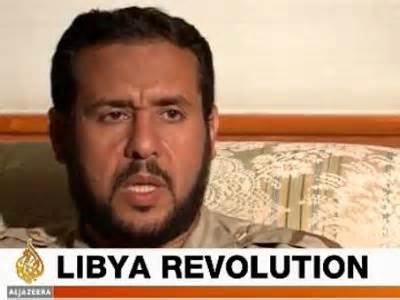
Le chef historique d'Al Qaïda en Lybie.
Le chef historique d’Al Qaïda en Libye.
Chef historique d’Al-Qaida en Libye, Abdelhakim Belhadj, est devenu gouverneur militaire de Tripoli « libérée » et a été chargé d’organiser l’armée de la « nouvelle Libye ».

Dans les années 80, la CIA incite Awatha al-Zuwawi à créer une officine en Libye pour recruter des mercenaires et les envoyer au jihad en Afghanistan contre les Soviétiques. À partir de 1986 les recrues libyennes sont formées au camp de Salman al-Farisi (Pakistan), sous l’autorité du milliardaire anti-communiste Oussama Ben Laden.

Lorsque Ben Laden se déplace au Soudan, les jihadistes libyens l’y suivent. Ils y sont regroupés dans leur propre compound. À partir de 1994, Oussama Ben Laden dépêche des jihadistes libyens dans leur pays pour tuer Mouammar Kadhafi et renverser la Jamahiriya populaire et socialiste.

Le 18 octobre 1995, le groupe se structure sous la dénomination Groupe islamique combattant en Libye (GICL). Durant les trois années qui suivent, le GICL tente par quatre fois d’assassiner Mouammar Kadhafi et d’instaurer une guérilla dans les montagnes du Sud. À la suite de ces opérations, l’armée libyenne —sous le commandement du général Abdel Fattah Younés— mène une campagne d’éradication de la guérilla, et la Justice libyenne lance un mandat d’arrêt contre Oussama Ben Laden, diffusé à partir de 1998 par Interpol.

Selon l’agent du contrespionnage britannique David Shayler, le dévelopment du GICL et la première tentative d’assassinat de Mouammar Kadhafi par Al-Qaida sont financés à hauteur de 100 000 livres par le MI6 britannique [1].

À l’époque, la Libye est le seul État au monde à rechercher Oussama Ben Laden, lequel dispose encore officiellement de soutiens politiques aux États-Unis bien qu’il se soit opposé à l’opération « Tempête du désert ».

Sous la pression de Tripoli, Hassan el-Tourabi expulse les jihadistes libyens du Soudan. Ils déménagent leurs infrastructures en Afghanistan où ils installent le camp de Shaheed Shaykh Abu Yahya (juste au nord de Kaboul). Cette installation fonctionne jusqu’à l’été 2001, lorsque les négociations de Berlin entre les États-Unis et les Talibans à propos du pipe-line transafghan échouent. À ce moment-là, le mollah Omar, qui se prépare à l’invasion anglo-saxonne, exige que le camp passe sous son contrôle direct.

Le 6 octobre 2001 le GICL est inscrit sur la liste établie par le Comité d’application de la résolution 1267 du Conseil de sécurité des Nations Unies. Il y figure toujours. Le 8 décembre 2004, le GICL est inscrit sur la liste des organisations terroristes établie par le département d’État des États-Unis. Il y figure toujours. Le 10 octobre 2005, le ministère britannique de l’Intérieur interdit le GICL sur son territoire. Cette mesure est toujours valide. Le 7 février 2006, le Comité des Nations Unies prend des sanctions à l’égard de 5 membres du GICL et de 4 sociétés qui leurs sont liées, qui continuent impunément à opérer sur le territoire du Royaume-Uni sous protection du MI6.

Durant la « Guerre contre la terreur », la mouvance jihadiste s’organise. L’expression « Al-Qaida », qui désignait au départ une vaste base de données dans laquelle Oussama Ben Laden choisissait les mercenaires dont il avait besoin pour des missions ponctuelles, devient progressivement un groupuscule. Sa taille diminue au fur et à mesure de sa structuration.

Le 6 mars 2004, le nouveau chef du GICL, Abdelhakim Belhadj, qui s’est battu en Afghanistan aux côtés d’Oussama Ben Laden [2] et en Irak, est arrêté en Malaisie, puis transféré dans une prison secrète de la CIA en Thaïlande où il est soumis au sérum de vérité et torturé. À la suite d’un accord entre les États-Unis et la Libye, il est renvoyé en Libye où il est torturé, mais par des agents britanniques cette fois, à la prison d’Abou Salim.

Le 26 juin 2005, les services secrets occidentaux organisent à Londres une rencontre d’opposants libyens. Ils constituent la « Conférence nationale de l’opposition libyenne » en unissant trois factions islamiques : les Frères musulmans, la confrérie des Sénoussi, et le GICL. Leur manifeste fixe trois objectifs :
- renverser Mouammar Kadhafi ;
- exercer le pouvoir pour un an (sous le nom de « Conseil national de transition ») ;
- rétablir la monarchie constitutionnelle dans sa forme de 1951 et faire de l’islam la religion d’État.

En juillet 2005, Abu al-Laith al-Liby parvient contre toute vraisemblance à s’échapper de la prison de haute sécurité de Bagram (Afghanistan) et devient l’un des chefs d’Al-Qaida. Il appelle les jihadistes du GICL qui ne l’ont pas encore fait à rejoindre Al-Qaida en Irak. Les Libyens deviennent majoritaires parmi les kamikazes d’Al-Qaida en Irak [3]. En février 2007, al-Liby conduit une attaque spectaculaire contre la base de Bagram alors que le vice-président Dick Cheney s’apprête à la visiter. En novembre 2007, Ayman al-Zawahiri et Abu al-Laith al-Liby annoncent la fusion du GICL avec Al-Qaida.

Abu al-Laith al-Liby devient l’adjoint d’Ayman al-Zawahiri, et à ce titre le numéro 2 d’Al-Qaida puisque l’on est sans nouvelles d’Oussama Ben Laden. Il est tué par un drone de la CIA au Waziristan, fin janvier 2008.

Durant la période 2008-2010, Saif el-Islam Kadhafi négocie une trêve entre la Jamahiriya et le GICL. Celui-ci publie un long document, Les Etudes correctrices, dans lequel il admet avoir commis une erreur en appelant au jihad contre des coreligionnaires dans un pays musulman. En trois vagues successives, tous les membres d’Al-Qaida sont amnistiés et libérés à la seule condition qu’ils renoncent par écrit à la violence. Sur 1 800 jihadistes, plus d’une centaine refuse cet accord et préfère rester en prison.

Dès sa libération, Abdelhakim Belhadj quitte la Libye et s’installe au Qatar.

Début 2011, le prince Bandar Bin Sultan entreprend une série de voyages pour relancer Al-Qaida en élargissant son recrutement, jusqu’ici presque exclusivement arabe, aux musulmans d’Asie centrale et du Sud-Est. Des bureaux de recrutement sont ouverts jusqu’en Malaisie [4]. Le meilleur résultat est obtenu à Mazar-i-Sharif, où plus de 1 500 Afghans s’engagent pour le jihad en Libye, en Syrie et au Yémen [5]. En quelques semaines, Al-Qaida, qui n’était plus qu’un groupuscule moribond, peut aligner plus de 10 000 hommes. Ce recrutement est d’autant plus facile que les jihadistes sont les mercenaires les moins chers du marché.

Le 17 février 2011, la « Conférence nationale de l’opposition libyenne » organise la « journée de la colère » à Benghazi, qui marque le début de la guerre.

Le 23 février, l’imam Abdelkarim Al-Hasadi proclame la création d’un Émirat islamique à Derna, la ville la plus intégriste de Libye dont sont originaires la majorité des jihadistes devenus kamikazes d’Al-Qaida en Irak. Al-Hasadi est un membre du GICL de longue date qui a été torturé par les États-Unis à Guantanamo [6]. La burqa devient obligatoire et les châtiments corporels sont rétablis. L’émir Al-Hasidi organise sa propre armée, qui débute avec quelques dizaines de jihadistes et en regroupe bientôt plus d’un millier.

Le général Carter Ham, commandant de l’Africom, chargé de coordonner l’opération alliée en Libye, exprime ses interrogations quant à la présence parmi les rebelles qu’on lui demande de défendre des jihadistes d’Al-Qaida qui ont tué des GI’s en Afghanistan et en Irak. Il est relevé de sa mission qui est transmise à l’OTAN.

Un peu partout en Cyrénaïque « libérée », les hommes d’Al-Qaida sèment la terreur, pratiquant massacres et tortures. Ils se font une spécialité d’égorger les kadhafistes et de leur arracher un œil, et de couper les seins des femmes impudiques. L’avocat de la Jamahiriya, Me Marcel Ceccaldi, accuse l’OTAN de « complicité de crimes de guerre ».

Le 1er mai 2011, Barack Obama annonce qu’à Abbottabad (Pakistan), le commando 6 des Navy Seals a éliminé Oussama Ben Laden dont on était sans nouvelles crédibles depuis presque 10 ans. Cette annonce permet de clore le dossier Al-Qaida et de relooker les jihadistes pour en refaire des alliés des États-Unis comme au bon vieux temps des guerres d’Afghanistan, de Bosnie-Herzégovine, de Tchétchénie et du Kosovo [7]. Le 6 août, tous les membres du commando 6 des Navy Seals meurent dans la chute de leur hélicoptère.

Hillary Clinton photographiée avec le contrebandier (drug dealer) Jorge Cabrera quelque temps avant  la guerre de Libye.
Hillary Clinton photographiée avec le contrebandier (drug dealer) Jorge Cabrera quelque temps avant la guerre de Libye.On ramassait de l’argent pour une oeuvre de charité!

Abdelhakim Belhadj revient dans son pays dans un avion militaire qatariote au début de l’intervention de l’OTAN. Il prend le commandement des hommes d’Al-Qaida dans les montagnes du Djebel Néfoussa. Selon le fils du général Abdel Fattah Younés, c’est lui qui commandite le 28 juillet 2011 l’assassinat de son vieil ennemi qui était devenu le chef militaire du Conseil national de transition. Après la chute de Tripoli, Abdelhakim Belhadj ouvre les portes de la prison d’Abou Salim et libère les derniers jihadistes d’Al-Qaida qui y étaient détenus. Il est nommé gouverneur militaire de Tripoli. Il exige des excuses de la CIA et du MI6 pour le traitement qu’ils lui ont fait subir par le passé [8]. Le Conseil national de transition lui confie la charge de former l’armée de la Libye nouvelle.

Thierry Meyssan

[1] « David Shayler : “J’ai quitté les services secrets britanniques lorsque le MI6 a décidé de financer des associés d’Oussama Ben Laden“ », Réseau Voltaire, 18 novembre 2005.

[2] « Libya’s Powerful Islamist Leader », par Babak Dehghanpisheh, The Daily Beast, 2 septembre 2011.

[3] « Ennemis de l’OTAN en Irak et en Afghanistan, alliés en Libye », par Webster G. Tarpley, Réseau Voltaire, 21 mai 2011.

[4] « La Contre-révolution au Proche-Orient », par Thierry Meyssan, Réseau Voltaire, 11 mai 2011.

[5] « CIA recruits 1,500 from Mazar-e-Sharif to fight in Libya », par Azhar Masood, The Nation (Pakistan), 31 août 2011.

[6] « Noi ribelli, islamici e tolleranti », reportage de Roberto Bongiorni, Il Sole 24 Ore, 22 mars 2011.

[7] « Réflexions sur l’annonce officielle de la mort d’Oussama Ben Laden », par Thierry Meyssan, Réseau Voltaire, 4 mai 2011.

[8] « Libyan commander demands apology over MI6 and CIA plot », par Martin Chulov, Nick Hopkins et Richard Norton-Taylor, The Guardian, 4 septembre 2011.

Source: diverses sur le web…recherche personnelle,archives personneles (journeaux ,revues,etc)

Rewriting history: the four Great Gods Tiki of Hawaï

The Four Major Tiki Gods
Hawaiian Forces of Nature Personified

ku1
Ku – Ancient Tiki God of War
In Hawaiian mythology Ku is one of the four great gods along with the ancient tiki gods, Kanaloa, Kane, and Lono. He was the husband of the goddess Hina (Beckwith 1970:12), suggesting a complementary dualism as the word ku in the Hawaiian language means « standing up » while one meaning of ‘hina’ is ‘fallen down.’

Ku is worshipped under many names, including Ku-ka-ili-moku, the « Seizer of Land » (a feather-god, the guardian of Kamehameha). Rituals included human sacrifice, which was not part of the worship of the other gods. Ku, Kane, and Lono caused light to shine in upon the world. They are uncreated gods who have existed from eternity (Tregear 1891:540).

Lono – Ancient Tiki God of Fertility and Peace
In Hawaiian mythology, Lono is a fertility and music god who descended to Earth on a rainbow to marry Laka. In agricultural and planting traditions, Lono was identified with rain and food plants. He was one of the four gods (with Ku, Kane, and his twin brother Kanaloa) who existed before the world was created. Lono was also the god of peace. In his honor, the great annual festival of the Makahiki was held. During this period (from October through February), all unnecessary work and war was kapu (taboo). This is also the season of taxes, olympic like games and when chiefs regrouped their forces (and organized campaigns ironically).

Lono and the death of Captain Cook
Some Hawaiians believed that Captain James Cook was Lono returned and indeed this fact may have ultimately contributed to Capt. Cook’s death (see James Cook – Third voyage (1776-1779)). However, it is uncertain whether Captian Cook was taken for the god Lono or one of several historical or legendary figures who were also referred to as Lono-i-ka-Makahiki. According to Beckwith, there was indeed a tradition that such a human manifestation of the god [Lono] had actually appeared, established games and perhaps the annual taxing, and then departed to « Kahiki, » promising to return « by sea on the canoes ‘Auwa’alalua » according to the prose note. « A Spanish man of war » translates the queen, remembering a tradition of arrival of a Spanish galleon beaten out of its course in the early days of exploration of the Pacific; « a very large double canoe » is Mrs. Pukui’s more literal rendering, from ‘Au[hau]-wa’a-l[o]a-lua. The blue-sailed jellyfish we call « Portuguese man-of-war » Hawaiians speak of, perhaps half in derision, as ‘Auwa’alalua. The mother honored Keawe’s son, perhaps born propitiously during the period of the Makahiki, by giving him the name of Lono-i-ka-Makahiki, seeing perhaps in the child a symbol of the tiki god’s promised return.” (Beckwith 1951).

Kane– Ancient Tiki God of Light and Life
In Hawaiian mythology, Kane Milohai is the father of the tiki gods Ka-moho-ali’i, Pele (whom he exiled to Hawaii), Kapo, Namaka and Hi’iaka by Haumea. He created the sky, earth and upper heaven and gave Kumu-Honua the garden. He owned a tiny seashell that, when placed on the ocean’s waves, turned into a huge sailboat. The user of the boat had merely to state his destination and the boat took him there. In agricultural and planting traditions, Kane was identified with the sun.

The word Kane alone means « man ». As a creative force, Kane was the heavenly father of all men. As he was the father of all living things, he was a symbol of life in nature.

In many chants and legends of Ancient Hawaii, Kane is paired with the god Kanaloa, and is considered one of the four great Hawaiian divinities along with Kanaloa, Ku, and Lono.

Alternatively known as Kane, Kane-Hekili (« thunderer » or « lightning breaking through the sky »), Kane Hoalani.

Kanaloa – Ancient Tiki God the Sea
Kanaloa is one of the four great gods of Hawaiian mythology, along with Kane, Ku, and Lono. He is the local form of a Polynesian deity generally connected with the sea. Roughly equivalent deities are known as Tangaroa in New Zealand, Tagaloa in Samoa, and Ta’aroa in Tahiti.

In the traditions of Ancient Hawaii, Kanaloa is symbolized by the squid, and is typically associated with Kane in legends and chants where they are portrayed as complementary powers (Beckwith 1970:62-65). For example: Kane was called upon during the building of a canoe, Kanaloa during the sailing of it; Kane governed the northern edge of the ecliptic, Kanaloa the southern; Kanaloa points to hidden springs, and Kane then taps them out. In this way, they represent a divine duality of wild and taming forces like those observed (by Georges Dumezil, et al.) in Indo-European chief god-pairs like Odin-Tyr and Mitra-Varuna, and like the popular yin-yang of Chinese Taoism.

Interpretations of Kanaloa as a god of evil opposing the good Kane (a reading that defies their paired invocations and shared devotees in Ancient Hawaii) is likely the result of European missionary efforts to recast the four major divinities of Hawaii in the image of the Christian Trinity plus Satan.

The 4 Great Gods Tiki

Minor Tiki Gods and Legends

Kauhuhu – The Shark God of Molokai
Kauhuhu lives in a cave on the side of a high ocean cliff that is protected by two ancient Hawaiian dragons. He arrives to his cave by riding the eighth wave in a set of giant waves. He devoured any man the saw him and his dragons killed anyone who entered his cave. Once however he found a man in his cave and quickly pounced on him and had him halfway in his mouth when he took pity on him. The man, Kamalo, was able to explain quickly enough that his sons had been murdered for playing a powerful chiefs tiki drums. The chief, Kapu, was very powerful and everyone feared him so Kamalo had to seek Kauhuhu, the shark god.

The shark god instructed Kamalo to return to his village in the Mapulehu Valley and to prepare a sanctuary with many sacred animals and surrounded by sacred white tapa kapu staffs. Then he would wait the arrival of the shark god. A giant cloud would float against the wind over from the Lanai island. It would grow in size and cover the mountains above Mapulehu Valley. From it a rainbow would appear and Kamalo would know the shark god had arriaved.

Kamalo returned to his home and took care of the shark gods old priest (kahuna) who he carried up a cliff, he then placed the kapu staffs in a large ring on the cliff, fencing in the sacred animals. Kamalo called all those close to him together to live within the enclosure. Then he waited with his eyes toward Lanai.

Months past until the cloud appeared, it traveled against the wind and came to rest above the mountains that loomed over the Mapulehu Valley. A rainbow appeared and the winds began to pick up force. Towering dark Storm clouds soon blew in and a great storm began to rage. Lightning broke the sky and torrential rains poured forth in quantities the island had never known. The water rushed down the mountains into the valley in a flash flood. The torrent rushed from the mountain with such force everything before it was swept up into it. The only area that was not devastated was the sanctuary with in the kapu staffs where Kamalo and his followers watched in awe. The storm ravaged the land and the waters flooded the valley, washing everything before it away. Kupa, his home, all of his followers and possessions were washed into the sea where the people of Kauhuhu’s sharks awaited to deliver Kamalo’s final revenge. The bay waters were soon stained red with the blood of Kupa and his followers.

After this day the bay was known as Aikanaka, meaning ‘man-eater’, and everyone learned a great respect for the power of clouds in the peaks above their village. Everyone that heard the story also learned great respect for the power of the Shark God, Kauhuhu.

Kaupe – The Cannibal Dog Man
In ancient Hawaii, there was a class of people called Olohe who were hairless and often specialized in wrestling and bone breaking. Unfortunately, they were also known to be cannibals and robbers. Their leader was Kaupe and he had the power to turn into a giant dog. He used these powers to stalk and kill men until his death. Now he hunts hawaiians as a ghost dog.

Nightmarchers
In Hawaiian legend, Nightmarchers (huaka’i po or « Spirit Ranks, » ‘oi’o) are the ghosts of ancient Hawaiian warriors. On certain nights, they are said come forth from their burial sites to march out, weapons in hand, to past battles or to other sacred places. Anyone living near their path may hear chanting and marching, and must go inside to avoid notice. They might appear during the day if coming to escort a dying relative to the spirit world. Anyone looking upon or seen by the marchers will die unless a relative is within the marcher’s ranks- some people maintain that if you lie face down on the ground they will not see you. Others say that this only works if you are naked. Still others say that you should be naked, lie face up and feign sleep. Placing leaves of the ti (Cordyline sp.) around one’s home is said to keep away all evil spirits, and will cause the huaka’i po to avoid the area. Another  spiritual  creature will coming for help.


A Tiki God in 1905
A Tiki God in 1905

Nanaue – The Shark Man
Once a shark king noticed a beautiful princess on a Hawaiian beach. He approached her in the form of a great human chief and they fell in love. They were married and she became pregnant. However, on the night before she gave birth to her son, Nanaue, the Shark King departed. He warned her to never let the boy eat meat and returned to the sea.
When the boy was born the princess noticed a slit on his back, she kept it covered and hid it from the village. As he grew this slit became a large shark mouth upon his back that he kept covered from all. When the boy grew to be a man she could not eat with him because of a strict taboo against women and men eating together. One day the boy ate meat and developed a ravenous taste for it. From then on he would follow people to the beach when they went swimming, he would then turn to the form of a giant shark and eat them as they returned to the shore. However, after many died the village became suspicious and tore Nanaue’s shirt off revealing the large shark mouth on his back.

After much struggle and vicious bites from the mouth on Shark Man’s back the villagers tied him up. The high chief then ordered that a great oven be built and everyone dug a pit and placed stones in it. They then attempted to heave the Shark Man into the oven, but he then turned himself into shark form, snapping the ropes that bound him. Nanaue flopped, snapped at people and eventually tumbled down a hill into a river that flowed from the Waipio falls. The warriors of the valley ran along the side of the river, throwing spears and stones at the giant shark, but none dared enter and before they could get their nets Nanaue swam into the sea.

Nanaue swam far from Waipio valley and was not sighted again until he resurfaced in Maui were they had not yet heard about the Shark Man. He resided near Hana and married their chief, a beautiful women. There, he secretly fed on the people of Maui until he became careless and was seen changing shape and attacking a victim. The villagers then launched canoes and hunted Nanaue out of their waters.

Nanaue later surfaced in Maui where he settled near Hana. Unfortunately though, he hadn’t lost his taste for human flesh and he began feeding on innocent villagers. One day he became careless though and was spotted changing into shark form to pursue a swimmer. The warriors of Maui then lunched their canoes and pursued him instead! Using spears and nets they attempted to capture and kill the Shark Man, but he slipped away into the wide ocean.

Once again the Shark Man remerged onto a Hawaiian island. This time it was Molokai where he began a new life. Swimmers began disappearing again though and suspicion was raised. The network of Hawaiian Kahunas had by this time spread the word about the dangerous Shark Man and kahunas of Molokai placed everyone on alert.


A modern design of the Tiki spirit

The fishermen, who were a crucial part of the effort to find the Shark Man, noticed a man slip into the water and then a giant shark in the sea. They cautiously angled their boats toward him then threw out their nets. The Shark Man was entangled, but he would soon escape; however the warriors of Molokai were ready and launched their canoe and joined the struggle. The great shark form of Nanaue was stabbed with spears and repeatedly netted. Kahunas chanted and used all of their magic to sap the shark of his great strength. The terrible struggle stained the sea red but the might of the Molokai fishermen, warriors and kahunas proved to be too much for Nanaue. He was eventually dragged to the shore where he was beaten with war clubs, slashed with sharktoothed weapons and stabbed with spears. Finally the form of the great shark reverted back to that of a man with a shark mouth on his back, bleeding from dozens of wounds in the shallow red stained surf.

The high chief of Molokai then ordered Nanaue’s body to be chopped up and the pieces thrown into an oven. The villagers were happy to oblige and such was the end of the Nanaue. Soon the word about his death spread like smoke from the oven, and all Hawaiians breathed easier knowing the Shark Man had been vanquished. (for a longer version see Hawaiian-Mythology)
Lua-o-Milu – Land of the Dead
In Hawaiian mythology, Lua-o-Milu is the land of the dead, ruled by Milu. Dead souls enter Lua-o-Milu through a trail called Mahiki. The spirits of the dead can watch what the living do and turn them to stone by staring at them.
(see see Hawaiian-Mythology for more information)

Other Ancient Hawaiian Tiki Gods
In a famous creation story, the demigod Maui fished the islands of Hawaii from the sea after a little mistake he made on a fishing trip. From Haleakala, Maui ensnared the sun in another story, forcing him to slow down so there was equal periods of darkness and light each day. Pele is another famous deity, the fiery (in more then one way) daughter of Kane who brought the sea to Hawaii and causes lava flows.

Ancient Hawaiian Lava Sledding
Hawaiian lava sledding (Hawaiian: he‘e holua, « mountain surfing ») is a traditional sport of Native Hawaiians. Similar to wave surfing, he‘e holua involves the use of a narrow 12 foot long, 6 inch wide wooden sled (papaholua) made from native wood like Kau‘ila or Ohia. The sled is used standing up, lying down, or kneeling, to ride down man-made courses of lava rock, often reaching speeds of 50 mph or greater. In the past, Hawaiian lava sledding was considered both a sport and a religious ritual for honoring the gods.

(Sources: personnal researches on the web)

LES GRANDES OREILLES DE LA NATIONAL SECURITY AGENCY–N.S.A. UN SECRET DE POLICHINEL

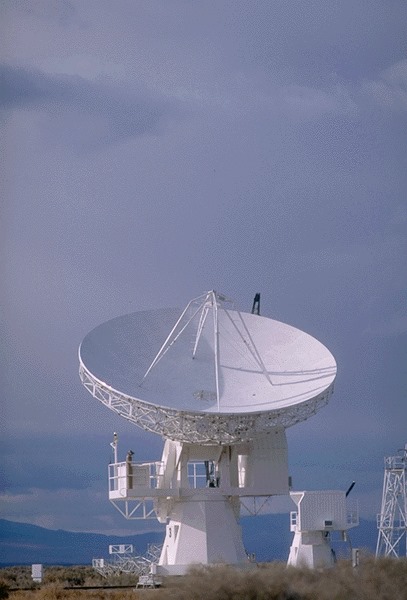
antenne parabolique

LES GRANDES OREILLES DE LA NATIONAL SECURITY AGENCY–N.S.A.
UN SECRET DE POLICHINEL !

Avertissement : les sites indiqués dans cet article ne sont peut-être plus accessibles—Ce texte date d’une dizaine d’années.

Les États-Unis et quatre de leurs alliés ont déployé un gigantesque réseau d’écoute électronique capable d’intercepter les télécommunications du monde entier. Depuis la fin de la guerre froide un dispositif ultra-secret connu sous ne nom Échelon est de plus en plus utilisé pour les opérations d’espionnage de sécurité et…économique.
Tout le monde connaît la C.I.A.. Même les citoyens des États-Unis d’Amérique ignore l’existence de la N.S.A.
La N.S.A. c’est une formidable machine à espionner et à écouter sans aucune limite. Elle fonctionne sans aucun contrôle démocratique.
Toutes nos conversations téléphoniques sont captées par des oreilles indiscrètes et automatiquement triées par des ordinateurs ultra-puissant. La fiction de George Orwell et son Big Brother omniprésent, est largement dépassé par la réalité. Les services américains et leurs associés britanniques, canadiens, australiens et néo-zélandais s’intègrent dans le réseau Échelon.
Une étude du Parlement européen le confirme toutes les communications électroniques, téléphoniques et par fax en Europe ( et ailleurs ) sont quotidiennement interceptées par la N.S.A.
La branche la plus secrète de la N.S.A. dispose de satellites espions en relation avec des stations terrestres qui lui permettent d’écouter toutes les télécommunications en Europe, mais aussi sur l’ensemble de la planète. Ce réseau « discret « connu sous le nom d’Échelon, même s’il a sans doute été rebaptisé depuis les premières révélations sur son existence.

Ce réseau Échelon reste l’un des secrets les mieux protégés par l’espionnage américain. Une certitude cependant: cette organisation mondiale d’espionnage vise principalement aujourd’hui des cibles non-militaires : gouvernements, organisations, entreprises, associations ou particuliers.

Les sujets dignes d’intérêt pour ce réseau espion sont définis par les cinq pays qui participent à son fonctionnement sur la base du pacte UKUSA.Cet accord organise la répartition des taches entre les pays signataires: États-unis, Grande Bretagne, Canada, Australie et Nouvelle-Zélande.
Chaque internaute peut découvrir quelques secrets de la N.S.A en frappant sur son ordinateur deux adresses:
http://www.rfi.fr/ Kiosque/Mfi/Guerre/index.htlm
et
http://www.europart.eu.int/dg4/stoa/fr/publi/166499/execsum.htm
Ce second site mérite un attention toute particulière, car les informations qu’il fournit émane directement du Parlement Européen. Il est recensé sous l’indicatif PE 166.499/Int.St.exc.Sum./fr .
Nous y apprenons que les techniques de surveillance peuvent être définies comme des dispositifs ou des systèmes capables de surveiller, de suivre et d’évaluer les mouvements des personnes, de leurs biens ou autres avoir. Ces techniques sont essentiellement utilisées pour suivre les activités de dissidents de militants des droits de l’homme, de journalistes, de responsables étudiants, de minorité, de responsables syndicaux et d’opposants politiques. Il s’est développé une très vaste gamme de technique de surveillance, en passant par des lunettes pour vision nocturne, les microphones paraboliques permettant de détecter des conversations à plu d’un kilomètre de distance, les versions laser, capable de surprendre n’importe quelle conversation derrière une fenêtre fermée dans la ligne de mire, la caméra stroboscopique danoise JAI, susceptible de prendre des centaines de photographies en quelques seconds et de photographier individuellement tous les participants d’une manifestation ou d’un défilé et les système de reconnaissance automatique de véhicules capables de suivre des automobiliste à travers les rues d’une ville via un système informatique géographique fonctionnant à base de cartes.

Jusque dans les années soixante, la surveillance, pour l’essentiel, était peu technique et onéreuse car il s’agissait de suivre de place en place des suspects, ce qui nécessitait jusqu’à six personnes travaillant en équipes de 2 et faisant les trois huit. Toutes les informations et les contacts récoltés devaient être dactylographiés et classés avec peu d’espoir de vérifications rapides par recoupement. Même la surveillance électronique employait un grand nombre de personnes. La police est-allemande, par exemple, recourait aux service de 500 000 informateurs secrets, dont 10 000 étaient employés uniquement à écouter et transcrire les communications téléphoniques des citoyens.

Dans les années quatre-vingts, de nouvelles formes de surveillance électroniques sont apparues et nombre d’entre elles ont consisté à automatiser l’interception des communications.
En 1993, les Départements américains de la défense et de la justice ont signé des protocoles d’accord relatifs à “ des opérations autre que la guerre et le respect de la loi “ afin de faciliter le développement conjoint des technologies et leur partage. Selon David Banistar de Privacy International, “ pour contrebalancer les réductions de contrats militaires, qui ont commencé dans les années quatre-vingts, les entreprise de matériels informatique et électronique ont développé de nouveaux marchés- aux États-Unis et à l’étranger, avec des équipements conçus à l’origine pour les militaires. Des sociétés, telles que E.Systems, Electronic Data Systems et Texas Instruments vendent des système informatiques avancés et des équipements de surveillance à des gouvernements nationaux qui les utilisent pour maintenir l’ordre, pour contrôler les frontières et dans l’administration sociale. Les rêves les plus fous de la police secrète est- allemande sont rapidement en train de devenir réalité dans le monde libre”.

( CCTV ) OU RÉSEAUX DE SURVEILLANCE AVEC TÉLÉVISION EN CIRCUIT FERMÉ.

Le mode de surveillance visuelle a terriblement changé ces dernière années. certes, les officiers de police et de renseignement continuent à photographier les manifestants et les individus qui les intéressent mais ces images peuvent de plus en plus être mémorisées et exploitées. L’ultra miniaturisation qui ne cesse d’enregistrer des progrès signifie que ces dispositifs peuvent être rendus quasiment indétectables et peuvent faire l’objet d’un usage abusif par des personnes physiques, des entreprises et des agences publiques.
L’attitude face aux réseaux de caméras CCTV varie énormément dans l’Union européenne, de la position du Danemark qui interdit par la loi l’usage de ce type de caméras, à la position du Royaume-Uni où il existe plusieurs centaines de réseaux CCTV. Un aspect spécifique est l’admissibilité juridique des preuves fournies par les informations numériques recueillies par les systèmes les plus avancées de CCTV. Ce informations relèvent pour l’essentiel de la législation relative à la protection des données si les informations recueillies peuvent être exploitées par plaque numérologique ou en fonction de l’heure par exemple.
Les articles 3 et 13 de la directive ne doivent pas servir de couverture à l’utilisation des CCTV en toute circonstance dans un contexte national.
La Principauté de Monaco qui utilise ce système, qui couvre tout le territoire princier, a presque totalement fait disparaître la petite délinquance de Monté-Carlo et de Monaco.
LES SYSTÈMES DE SURVEILLANCE ALGORITHMIQUES

La révolution en matière de surveillance urbaine donne actuellement naissance à une nouvelle génération de contrôle lorsque les systèmes fiables de reconnaissance des visages font leur apparition. Ils sont installés dans un premier temps dans des lieux fixes comme les tourniquets, les douanes, les portiques de sécurité, etc, pour permettre une reconnaissance standard de tout le visage. L’étude intérimaire estime qu’au début du 21 ème siècle, c’est à dire demain, la reconnaissance des visages sur CCTV sera effective et que les pays disposant d’infrastructure CCTV considéreront cette technique comme une opération allant de soi.
Lors du Championnat du Monde de Football, qui s’est déroulé à Paris en 1998, de tels système ont été utilisés avec succès par la police française.
À Londres, la compagnie américaine Software and Systems a mis à l’essai un moyen apte à scruter les foules et de comparer les visages aux images mémorisées dans une base de données contenue dans un ordinateur délocalisé. Il a fait ses preuves lors de deux attentats visant des clubs gays. Les coupables furent identifiés en moins de quarante huit heures.
Nous sommes à l’aube d’une révolution en matière de “ surveillance algorithmique “, d’analyse réelle de données par l’intermédiaire d’algorithmes” complexes permettant la reconnaissance et la poursuite automatiques. Cette automatisation non seulement étend le filet que constitue la surveillance, elle en réduit également la tailles des mailles.
De même, des systèmes de reconnaissance des véhicules ont été développés, qui sont capables d’identifier une plaque minéralogique et de suivre le véhicule à travers une ville en utilisant un système informatisé d’informations géographiques. Des principes de ce type sont désormais commercialisés , comme le système Talon, mis sur le marché en 1994 par la société britannique Racal, au prix de 2 000 livres pièce. Ce stratagème est capable de reconnaître les plaques numérologiques à partir d’une technologie de réseau neurale développé par Cambridge Neurodynamics et peut fonctionner de joue comme de nuit. À l’origine, il a été utilisé pour surveiller la circulation mais ses fonctions ont été récemment adaptées pour être utilisées dans la surveillance de sécurité et il a été incorporé à la “ ceinture de sécurité “ autour de Londres.Ce dispositif peut enregistrer tous les véhicules qui entrent ou quittent le périphérique un jour donné.
D’ores et déjà des systèmes multifonctions de gestion de trafic, tels que “ Traffic Master “ ( qui utilise des logiciels de reconnaissance de véhicules pour localiser et quantifier les bouchons ), permettent la mise en place d’une architecture de surveillance.
Ces dispositifs de surveillance soulèvent d’importantes questions de responsabilité, notamment lorsqu’ils sont délivrés à des régimes autoritaires. Les caméras utilisées sur la place Tiananmen avaient été vendues par Siemens Plessey comme systèmes avancés de contrôle de la circulation.
Or, après le massacre des étudiants en 1989, une chasse aux sorcières a été organisée par les autorités qui ont torturé et interrogé des milliers de personnes afin d’identifier les éléments subversifs. Le système de surveillance Scoot équipé de caméras américaines Pelco a été utilisé pour enregistrer très fidèlement les manifestations. Les images ont été diffusées à de multiples reprises par la télévision chinoise, assorties d’une récompense pour toute information ce qui a abouti à l’identification de la quasi totalité des opposants. une fois encore, le contrôle démocratique est le seul critère qui distingue un système moderne de contrôle de trafic d’une technologie avancée d’arrestation des dissidents. Des sociétés étrangères exportent des systèmes de contrôle de la circulation à Lhassa, au Tibet, alors que Lhassa ne connaît aucun problème de contrôle de trafic!
Tout un arsenal de dispositifs d’écoute et d’interception a été développé pour enregistrer les conversations et intercepter les télécommunications. Au cours de ces dernières années, il a beucoup été question, dans de nombreux États européens, de la pratique très répandue des écoutes légales ou illégales et de l’installation de microphones miniatures. L’installation de ces derniers est toutefois une technologie dépassée. Les espions modernes peuvent acheter des ordinateurs portables adaptés à cet effet et se régler simplement sur tous les téléphones mobiles branchés dans le secteur en déplaçant le curseur sur le numéro de ces appareils. La machine pourra même rechercher les numéros “ intéressants “ pour voir s’ils sont en communication. Ces types d’écoute font toutefois piètre figure face aux réseaux d’interception gouvernementaux opérant à l’échelon national et international.

N.S.A., COMME VOUS AVEZ DE GRANDES OREILLES !

Internet, satellites, téléphone, finances, commerces et sciences : rien n’échappe à l’attention de la National Security Agency. Doit-on la considérer comme un Ennemi d’État ou comme un organisme mondial de protection des nations et des citoyens ? Comme les langues du bon Ésope, elle peut être la pire et la meilleure des choses . Pour beaucoup elle se révèle néfaste ! “ ENNEMI D’ÉTAT “ le premier film réalisé sur ce service secret américain l’a dépeinte sous un jour plutôt terne !

Gadgets stupéfiants, montage à couper le souffle, documentation irréprochable : Ennemi d’État est bien plus qu’un thriller banal. Il révèle que la NSA, autrefois concentrée en direction de l’Union soviétique et tous ses alliés, a largement étendu aujourd’hui son champ d’action sur l’ordre des gouvernements américains successifs
L’étude intérimaire STOA, publiée dans le résumé analytique au mois de septembre 1998, prouve que le scénario, s’il est un peu teinté de paranoïa, est encore bien en-dessous de la vérité ! Cette analyse présente de façon détaillée les systèmes de surveillance globale qui facilitent la sur veillance de masses de toutes les télécommunications, y compris le téléphone, les transmissions par fax et par courrier électronique, qu’il s’agisse de celles de citoyens privés, des homme politiques, des syndicalistes ou des entreprises. On a assisté récemment, en matière d’écoutes téléphoniques, à une réorientation politique. Au lieu d’enquêter sur la criminalité ( une démarche réactive ), le services répressifs font de plu en plus porter leur travail sur la surveillance de certaines classes sociales et de certaines races vivant dans des zones sensibles. Il s’agit d’une sorte e veille informatique à caractère préventif, basée sur des modèle militaires visant à recueillir d’énormes quantités de renseignements peu importants.
Toutes les communications de l’Union Européenne sont interceptées par la NSA.
Il semble nécessaire aujourd’hui d’ouvrir les yeux sur cette forme subtile d’espionnage, à laquelle il semble bien difficile d’échapper.

(Sources: Guy Tarade )

Washington conduit le monde à la guerre finale – Paul Craig Roberts

…le point de non-retour en voie d’être franchi!

Avatar de avicRéseau International

star-ocean-the-last-hope-xbox-360-208« V comme Vendetta », est un film qui dépeint le mal dans une Angleterre futuriste comme un proxy du mal qui existe aujourd’hui en Amérique, et qui finit par la défaite du mal. Mais c’est un film dans lequel le héros a des super pouvoirs. Si vous n’avez pas vu ce film, vous devriez le regarder. Il pourrait vous réveiller et vous donner du courage. Les extraits ci-dessous montrent que, au moins chez certains cinéastes, le désir de liberté existe toujours.

Que le désir de liberté existe en Amérique, ça reste encore à voir. Si les Américains peuvent surmonter leur crédulité, leur lavage de cerveau permanent, leur propension à croire tous les mensonges que «leur» gouvernement leur dit, et si les Américains peuvent s’échapper de la matrice dans laquelle ils vivent, ils peuvent rétablir la moralité, la justice, la paix, la Liberté avec un grand ‘’L’’ et leurs libertés que «leur»…

Voir l’article original 1 415 mots de plus

Appel à l’insurrection de nos soldats au Québec et au Canada

armée canadienne  si la vie nous intéresse

Dans le contexte où l’armée canadienne cherche désespérément des appuis à ses troupes, cela ne nous étonne aucunement. Après le flop de sa propagande auprès des adolescent(e)s au secondaire (avec un « super emploi à temps partiel » !) et l’échec des reportages des journalistes du Journal de Montréal ou de TVA auprès des adultes, voici maintenant qu’elle vise les enfants de la première année du primaire !

Les jeunes auront la «chance» de vivre des activités physiques inspirées de l’entraînement militaire, des rencontres avec des militaires professionnelLEs et participeront aussi à des activités d’appuies aux troupes canadiennes en Afghanistan.

C’est bien beau vouloir développer des projets stimulants pour les enfants, mais nullement dans un contexte propagandiste ! Les campagnes de McDonald’s dans certaines écoles américaines en faveur de l’activité physique sont un autre exemple de l’aberrance de la propagande et la publicité fait aux jeunes.

Nous n’avons pas besoin en 2013,d’une Armée Canadienne qui ira défendre les valeurs de l’oligarchie au pouvoir,alors que ces valeurs s’effondrent et s’écroulent sous nos yeux,mais nous avons besoin d’une armée prête à rendre la Justice,au nom du peuple,avec  ce peuple et pour l’intérêt souverain et légitime de ce même peuple.

L’Armée Canadienne et ses dirigeants  n’ont pas à suivre la ligne de pensée mensongère et fourbe de nos politiciens,dans toutes les administrations.Elle doit plutôt faire ce qui lui incombe le mieux dans les circonstances:faire le Grand Ménage!

Tout à l’heure la mission de nos soldats sera terminée en Afghanistan,pays ou l’US Army protège les champs  de culture d’opium et ou une partie des budgets s’envole en pots-de-vin aux politicards corrompus,…comme ici.

L’Armée Canadienne ,en revenant d’Afghanistan a beaucoup de choses à se faire pardonner,espérons qu’un jour,il y aura quelqu’un de réfléchi qui mettra son pied à terre en disant: »Assez,c’est assez! »