
Los fundadores del Tercer Reich estaban involucrados en cuestiones esotéricas que, inevitablemente, a lo largo de los misterios asociados con el valle de Rennes-le-Château. Sus intereses eran, sin embargo, limitarse a lo efímero, no hay evidencia de la tenacidad con la que se persiguen las asociaciones físicas del valle. Muchos de los libros encuadernados en Rennes-le-Château mencionan un batallón de ingenieros de minas alemanas hecho excavaciones en la región durante la Segunda Guerra Mundial.
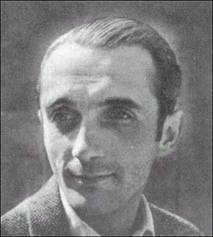
El camino de la investigación conduce a una cierta Otto Rahn, un alemán, nacido en 1904 en Michelstadt, Alemania. Asistió a la Universidad de Berlín, donde estudió literatura y filología (la ciencia del lenguaje). Durante su juventud, Otto Rahn había sentido atraído por el estudio del Grial tomó la idea de la novela de Wolfram von Eschenbach, Parzival y la historia de los cátaros. Él empezó a interesarse por la declaración de que el Santo Grial está escondido, según Parzifal en el santo monte de Montsalvat. Es importante, sobre todo cuando Rahn encontró que la fortaleza cátara de Montsegur contaba con una enorme cueva cerca Montsalvat conocida. Estaba intrigado por lo menos lo suficiente como para pasar mucho tiempo y energía para comprobar la coincidencia.
A pesar de que podría Eschenbach supuestamente no sabía leer ni escribir la historia de Parsifal se había transmitido a través de los años por los trovadores « trovadores » y juglares de la Edad Media. En cualquier caso, los registros muestran que la historia fue escrita por primera vez entre 1200 y 1210, al menos 33 años antes del asedio de Montségur.
Después de mucho pensar sobre la historia, parece que Otto Rahn había llegado a la conclusión de que el Monsalvat poema del Grial era en realidad los cátaros Montsegur y decidió visitar la región para continuar su investigación.
Durante sus viajes por la región, las auditorías llevó al Santo Grial, las leyendas populares alemanas y la historia de los cátaros, cayó en un elderl, ex coronel del ejército austríaco, Karl-Maria Wiligut Weisthor, un experto en la historia alemana y pre-medieval, runas, las leyendas, la magia y el ocultismo. Weisthor rápidamente se convirtió en el amigo más confiable Rahn. Fue para demostrar una reunión histórica para Wiligut (utilizando el nombre Weisthor) luego se unió a las SS en 1933 y fue ascendido a general de brigada en 1936, cuando se convirtió en asesor de Heinrich Himmler en materias ocultas, para luego convertirse más conocido en los círculos internos de las sociedades secretas alemanas como el Himmler « Rasputin ».
Es en este extraño torbellino de ideas neo-nazis se dirigió Otto Rahn, poco consciente de que estaba estudiando los cátaros habían sido auditados por los principales socialistas nacionales, así como científicos de los autores de muchas de las costumbres relacionadas los nazis. De hecho, Hitler estaba tan interesado en las tradiciones y leyendas de la Edad Media que había cometido como compositor e investigador, Carl Orff para ir monasterios medievales en Europa, para recoger viejas canciones populares y melodías. Una combinación de este material más tarde se conoció como el famoso Carmina Burana y se jugó en casi todos los rally.
Uno sólo puede imaginar la respuesta cuando la conexión a través de su amigo Weisthor con Himmler, Otto Rahn anunció que era la ubicación del Santo Grial, los tesoros del templo de Salomón y el Arca de la Alianza sagradas reliquias únicas. Himmler y compañía deben haber estado en el Hörbiger luna!
Los registros muestran que Himmler y, posiblemente, la Sociedad Thule han acordado financiar el viaje de Otto Rahn en Languedoc en 1931, donde permaneció en el pueblo de Lavelanet. Con eso, se viaja, es obvio que se convenció de que Montsegur fue de hecho la leyenda Monsalvat de Parsifal. A pesar de que descubrió varios sistemas de cuevas, que aún no había encontrado un tesoro. Sin embargo, sigue convencido de que estaba en el camino correcto. También encontró el fondo de las pinturas rupestres en la superficie de la roca que representa Templarios, uno de los cuales tenía una lanza – tal vez la lanza de Longinos, Lanza del Destino! El resultado de su primera incursión en Montsegur fue la primera Cruzada contra el Grial libro publicado en 1933.
En este trabajo, Rahn ha trazado la historia de lo que ha logrado hasta el momento y sugirió que las pruebas demostraban que había dos Grails – Una taza esmeralda y una tablilla de piedra. Este artefacto fue inscrita con runas por una raza de superhombres pre-alemanes que habían alcanzado el conocimiento fundamental de la « ley de la vida. » Ellos representaban la « gran tradición » de que sólo era válido para algunas personas, una teoría que liga a la leyenda y las creencias de la Sociedad Thule que el Norte fue habitada por la raza superior Hiperbórea alemán. Ni que decir tiene, el libro ha encontrado un público dispuesto a Hitler, Rosenberg, Hess, Dietrich Ekhart Himmler y otros la conducción!
En una carta escrita en Weisthor 09 1935 Otto Rahn informó a su amigo que estaba en un lugar donde él tenía razones para creer que el Grial se puede conocer, y que Weisthor debe mantener en secreto el material, excepto hablar de Himmler. Por lo tanto, en los próximos años, Otto Rahn, historiador y filólogo, se convirtió íntimamente involucrado en la jerarquía de la reunión del partido nazi Himmler, Alfred Rosenberg y Wolfram Sievers. Él no puede tener en cuenta que Adolf Hitler era un ávido estudiante de lo oculto desde su juventud, y la obsesión del Führer engullir su búsqueda.
Otto Rahn regresó a la región de Montsegur por un corto período en 1937, pero en ese momento los rumores ominosos de una guerra inminente se podía sentir en toda Europa. Himmler, por su parte, se reunió con el Dr. Hermann Wirth, quien le dio la idea de crear una unidad de investigación de la historia alemana.
Este fue el Deutsches Ahnenerbe, una empresa que se ha convertido en totalmente dependiente del apoyo de la SS. Rahn Weisthor y continuó trabajando en varios proyectos, pero no han recibido nuevas asignaciones de Himmler para los cuatro años anteriores, era obvio que Rahn fue considerado poco fiable, porque él no era un miembro de las SS. Rahn ha corregido la supervisión al unirse a la SS Negro Orden privada 12 de marzo 1936. Por arte de magia, una vez que llegó al club SS, las puertas comenzaron a abrirse a Rahn privado. 20 de abril 1936, fue ascendido a sargento, sin haber sido cabo. Casi de inmediato, recibió una misión para llevar a cabo una encuesta de Islandia para investigar sobre el terreno, en el posible lugar de Hiperbórea.
El aumento en las filas Rahn fue nada menos que espectacular. Él es el supuesto responsable técnico 30 de enero 1937 y el segundo teniente de la Orden Negro de 20 de abril de 1937. Su ascenso continuó al 1 de septiembre de 1938, cuando fue ascendido a teniente primero. su segundo libro, « Los cortesanos de Lucifer », fue publicado en 1936 y rápidamente se convirtió en la biblia del Partido Nacional Socialista.
Mientras tanto Himmler eligió castillo Wewelsburg en Baviera ser la futura sede de la Lanza de Longinos, el Santo Grial y otros tesoros del Templo de Salomón, que Otto Rahn había hablado. Sin embargo, era demasiado peligroso viajar en paz. Es mejor esperar a la próxima guerra con Francia. En 1937, se cree que una expedición del Languedoc Rahn haber sido sólo para asegurarse de que la memoria caché se mantuvo sin descubrir por otra persona.
El 9 de junio de 1938, Rahn solicitó y obtuvo permiso para escribir las siguientes cortesanos Lucifer. A partir de ese momento, su vida dio un giro inesperado para peor. Tuvo su punto de vista privado y público – que se oponía a la guerra y en su lugar, pensó Alemania y Europa deben convertirse al catarismo! La oposición a la guerra que se avecinaba era traición.
El 28 de febrero de 1939, Otto Rahn escribió una carta de renuncia al Gruppenführer Karl Wolff, jefe del estado mayor personal Himmler, al hablar de « motivos fundados » para su renuncia que parece Reichsführer en persona en la próxima visita Berlín.
Las circunstancias de la « extrema gravedad » que se refiere Rahn, y no pueden ser enviadas por carta, como tener un anillo de mal agüero. Nadie sabe a ciencia cierta el alcance del dilema que enfrentan Rahn, pero parece razonable llegar a la conclusión de que estaba en una vida cerca de la muerte … de una situación, o peor, en una posición de « la muerte contra la muerte » (traducción libre de una frase en alemán) que dejó el tiempo se determina el método.
El famoso « Zorro del Desierto », el mariscal de campo Erwin Rommel estaba a punto de sufrir el mismo destino en una fecha algo posterior. Su elección recayó sobre el suicidio en honor o la ejecución de la desgracia.
El motivo de vergüenza Rahn deja mucho espacio para la especulación. Es fácil cambiar sus opiniones políticas y su visión de un nuevo orden mundial, con Alemania como su líder, fueron sin duda al unísono con la ambición de Himmler como se expresa en estos términos:
« Después de la guerra, realmente vamos a construir nuestra orden, el orden en que le dimos sus principios más importantes de diez años antes de la guerra. Continuaremos nuestros veteranos, durante veinte años después de la guerra, mientras que la tradición puede ser establecida, una tradición que durará treinta, treinta y cinco o cuarenta años, toda una generación. Entonces, la orden será joven y fuerte, revolucionaria y activa en su marcha hacia el futuro. Él será capaz de cumplir con su deber y proporcionar a los pueblos germánicos con una elite. Esta elite se unirá al pueblo y al conjunto de Europa. »
Incluso el encargado de oponerse a la guerra podría ser fácilmente anulado por Himmler si Rahn había acordado cesar y desistir. Por lo tanto, nos quedamos con la incómoda y difícil de eliminar que algo más estaba involucrado sintiendo. La última pregunta parece girar en torno a los descubrimientos Rahn hizo durante sus viajes por la región de Languedoc. Era un hombre que sabía demasiado, o era un hombre que había revelado muy poco acerca de los resultados de su investigación – para los tesoros de Salomón y la Copa Esmeralda. Nadie va a saber la respuesta a esta pregunta. Lo que sí sabemos es que Rahn rápidamente recibió favorable a su solicitud de aprobación de la gestión de la respuesta SS.
Hay fragmentaria Rahn trató de salvar su vida un día durante este período, al proponer que se le permita regresar a Languedoc y vivir su vida en la soledad de las montañas de los Pirineos pruebas. Su solicitud fue rechazada y se quedó con dos opciones restantes, la muerte por suicidio o la muerte por la ejecución
El 13 de marzo 1939 Otto Rahn desapareció.
18 de mayo 1939, la siguiente noticia de la muerte apareció en la edición de Berlín de « Völkischer Beobachter »
« Otto Rahn murió! »
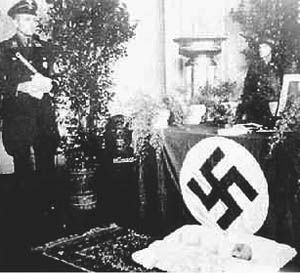
Foto: SS – Obersturmführer OTTO RAHN murió trágicamente en un tormenta de nieve en marzo de 1939. Lloramos por el compañero muerto, un oficial de las SS y creador decente de notables trabajos históricos y científicos.
WOLFF SS – Gruppenführer
Pero la historia del Grial no termina con la muerte de Otto Rahn. Aunque Francia fue ocupada por los alemanes en junio de 1940 Himmler hizo ningún intento de recuperar el Grial de Montsegur Otto Rahn. En cambio, las expediciones de excavación fueron enviados por el Ahnenerbe en otras jurisdicciones en las que las fuerzas nazis invadieron, y el otro al Tíbet en busca de los orígenes de la raza aria.
Himmler pudo haber pensado que con la ubicación del tesoro descrito razonable, no había razón para apresurarse. ¿Por qué no esperar hasta que toda Francia estaba ocupada – las cosas serían aún más fácil entonces. Sin embargo, al final de 1942, las fuerzas nazis habían recibido varios reveses, entre ellos y EI Alamein, y Checoslovaquia, el asesinato de Heydrich. Las fuerzas aliadas invadieron Europa y de repente el tiempo se acababa para conseguir el tesoro. Así, en junio de 1943 una reunión de expertos fue Montsegur y otros escondites posibles en la región de Languedoc, que Rennes-Ie-Chateau.
Estos expertos consistían historiadores, arqueólogos y geólogos. En este caso, todos los equipos salieron con las manos vacías. Himmler fue dejando casi sin opciones a considerar. Existía el tesoro o no? Si existía, y estaba escondido en la región de Montsegur y si ese fuera el caso, si hubiera sido localizado por Otto Rahn? La única cosa que Himmler pensaba sonaba a verdad es que Otto Rahn había determinado la localización aproximada del tesoro y sobre la base de esta convicción, se concluyó que el tesoro debe estar en un lugar que Otto Rahn o equipos de expertos habían encontrado. Otto Rahn, por supuesto, no se puede conocer, porque ya había tenido su « accidente » y Himmler dio cuenta de que necesitaba un enfoque diferente al problema y alguien para atacar lateralmente en vez de adelante. Un hombre vino a la mente – coronel de las SS Otto Skorzeny.
Skorzeny tenía la reputación de ser un verdadero soldado, que, en caso de aceptar una misión, por lo general nunca ha fallado. Skorzeny tenía un enfoque único para la resolución de problemas. Él era ingeniero de profesión y también fue un lingüista dotado. Saltó a la fama en la realización de éxito, atreverse rescate cima de la montaña de Mussolini al final de la guerra – una hazaña que se consideraba imposible. De hecho, tal era su audacia que en varias ocasiones se encontró con David Stirling, fundador del Servicio Aéreo Especial Británico para el café en diferentes ciudades europeas, mientras que la guerra estaba en pleno apogeo.
Skorzeny también tenía antecedentes de inteligencia, después de haber trabajado para el almirante Canaris, jefe de la inteligencia alemana y en ocasiones había recibido sus órdenes directamente de Himmler. 20 de abril 1942, fue promovido como « jefe de las fuerzas especiales de Alemania », que operan desde un pabellón de caza Friendenthal en Baviera. Así, en febrero de 1944, después de varias otras misiones, Skorzeny recibió una llamada de Himmler para recuperar el tesoro de Montségur.
Después de que los planes e instrucciones a sus hombres, Otto Skorzeny necesario con un pequeño comando llegó al campamento base Languedoc y se instala en Montségur. Pasaron el día siguiente de reconocimiento de la zona, por lo que varios descubrimientos interesantes, pero ninguno de ellos ha encontrado el tesoro. Skorzeny decidió hacer caso omiso de que Otto Rahn había informado, y centrarse en la lógica y escondites inverosímiles que no surgiría fácilmente.
Como castillo de Montsegur se sienta encima de un pico de montaña disponible sólo en tres de sus lados, con un pico de varios miles de metros el uno del otro, Skorzeny no concentrada en el borde del precipicio de roca. Después de rappel por la pared de roca vertical, buscó y encontró evidencia de pistas viejas que llevan lejos de los pies de la montaña. Tras éstas, finalmente descubrió una cueva amurallada, que, cuando se rompe abierto, habría revelado el tesoro. De acuerdo con La Copa Esmeralda – Arca de Oro, por el coronel Howard Buechner, Skorzeny entonces envió un mensaje (probablemente radio) en la sede de Himmler en Berlín:
Ureka
[Firmado] Scar
La respuesta rápida seguida:
Bien hecho. Enhorabuena. Mira al cielo al mediodía de mañana. Espere a nuestra llegada.
[Firmado Reichsführer – SS]
Según Buechner, Skorzeny había descubierto sin querer el tesoro en vísperas del 700 aniversario de la caída de Montsegur (16 de marzo 1944), y se sorprendió al ver una gran reunión de descendientes cátaros, en el camino hacia el castillo para rendir homenaje a su antepasados. El número 700 es doblemente importante en estos cátaros últimos días a una antigua profecía predijo: – « Al final de 700 años, el laurel será verde. »
Lo que esta extraña frase significaba realmente, se encontró un grupo inusual para el aniversario. A pesar de que pidió permiso para ir al castillo del gobernador militar alemán de la región, y se habían negado, aún se reunieron al pie de la montaña, listo para la caminata a las ruinas de la fortaleza. En este momento, la suerte quiso que, Skorzeny y su pequeño grupo de comandos caído sobre ellos. Por un momento, todo lo que debe haber parecido perdido, pero Skorzeny, cuando se acercó a los peregrinos por el permiso, no veía ninguna razón para negarse. Así, el grupo llegó a la fortaleza en medio día, al igual que Skorzeny les dijo que « mirar al cielo. »
Probablemente oculto por la multitud, un avión alemán volando alto, utilizando un equipo « escribir en el cielo », « pintó » una enorme cruz celta en el cielo. Para Skorzeny, informó que su misión estaba casi terminado, pero para los peregrinos a Montsegur, sucedió un milagro. Al día siguiente, una delegación oficial que comprende Reichsminister Alfred Rosenberg y el coronel Wolfram Sievers de la Ahnenerbe vino a felicitar a Skorzeny.
Se hicieron arreglos para que los ingenieros puedan ser traídos a los tesoros ocultos y que se devuelvan a la pequeña ciudad de Merkers, a 40 km de Berlín. Y aquí, después de que fue catalogado por miembros escogidos de la Ahnenerbe, la mayoría desapareció en varias partes del Reich en ruinas. Según el coronel Howard Buechner, el catálogo de los tesoros incluyen:
:
1. Miles de monedas de oro …
2. Los elementos que se creían que venir del templo de Salomón, que incluyó las planchas de oro y fragmentos de madera que una vez que habían hecho el arca de Moisés … una mesa chapada en oro, un candelabro de siete brazos, una urna de oro, personal, arpa, espada, placas de oro y un sinfín de floreros, muchos pequeños de oro y un número de gemas campanas y piedras de ónice, algunos de los cuales llevaba inscripciones …
3. Doce tablas de piedra con inscripciones rúnicas pre-que ninguno de los expertos fueron capaces de leer. Estos elementos incluyen el Grial Piedra alemán Otto Rahn.
4. Una hermosa plata con la esmeralda como lo que parecía ser Jasper Copa base. Tres placas de la Copa de Oro fueron inscritos con la escritura cuneiforme en una lengua antigua.
5. Un gran número de objetos religiosos de diferentes tipos de diferentes épocas … cruces que eran de oro o plata y adornado con perlas y piedras preciosas.
6. Las piedras preciosas en abundancia en todas las formas y tamaños
Una vez catalogados, muchas monedas de oro fueron fundidas y convertidas en lingotes y los nazis comenzaron a dispersarse por el tesoro … y para Alemania.
el mundo en los últimos días de la guerra
Merkers ciudad cayó a la tercera del Ejército de EE.UU. El general George Patton. Sus hombres pronto descubrieron las minas de sal cerca de donde estaba escondido el tesoro, y la recaudación que se puede dar una idea de la magnitud de la distancia inicial. Cuando el general Dwight D. Eisenhower, Omar Bradley y Patton personalmente inspeccionó la mina: He aquí la versión oficial pagada después de los registros:
Lingotes de oro … 600, 750 bolsas de monedas de oro … muchos otros objetos de valor, principalmente en forma de papel moneda. El valor estimado del tesoro fue de $ 250 millones (según las normas de 1945, cuando el oro se vendía a 35 dólares por onza).
Esto, por supuesto, representa sólo una pequeña parte del tesoro que no se dispersa por el tiempo antes de que llegaron los estadounidenses. En efecto, Buechner estima el valor actual de un día podía estar cerca de $ 60 mil millones!
Entonces, ¿qué pasó con el tesoro de miles de años? Según Buechner, los registros muestran que algunos fueron enviados a la Antártida (New Reich Agharta) y otras partes de América del Sur, mientras que algunos fueron enterrados en las profundidades de la fortaleza de Wewelsburg en Baviera y una caja bronce, que contienen documentos importantes fueron enterrados en una cueva secreta bajo el glaciar Schleigleiss cerca de Mountain Pass Zillertal en Baviera. Un depósito final se cree que se han escondido en el complejo secreto en el refugio de montaña en Berchtesgarden, la casa de Hitler.
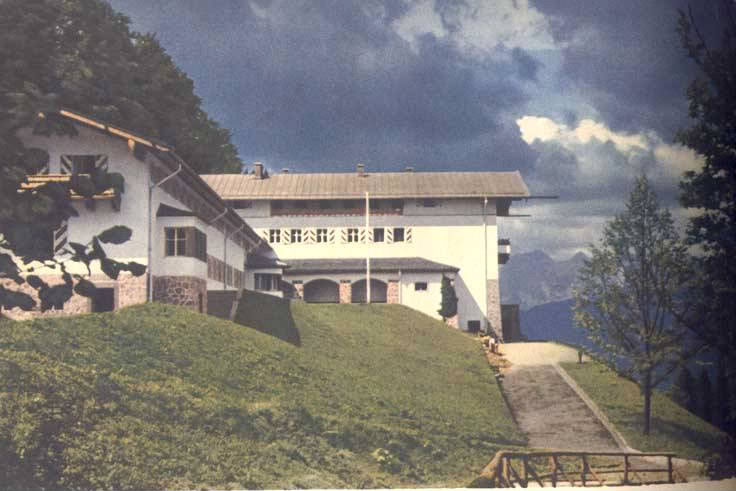
Los últimos registros indican que el tesoro del Templo de Salomón fue enviado desde el castillo de Wewelsburg Berchtesgarden 03 1945. Él fue transportado en camión a la Obersalzberg y se almacena en uno o más de los muchos subterráneo que enigma la montaña. Allí fue sellado en bunkers y bajo la atenta mirada de un contingente permanente de soldados SS. Cuando los bunkers han sido exploradas por las tropas de la 101 ª., EE.UU. División Aerotransportada en los primeros días de mayo de 1945, se encontraron con las disposiciones y los tesoros de la abundancia, pero el tesoro de Salomón había desaparecido.

~ Emerald Cup – Arca de Oro por Col.H.Buechner)
¿Es esta la última historia que se le dará a vislumbrar la luz que nos conducirá al Santo Grial y el tesoro? Probablemente no, los expertos estuvieron de acuerdo (en los 70) que los glaciares Schleigleiss se debe entregar su secreto … en 1995, después de lo cual se espera que la cacería podría reanudarse.
Una palabra de precaución. Estamos en deuda con Co! Onel H.Buechner por su historia de Otto Rahn y los tesoros de Montsegur. Estamos particularmente impresionados por la paciencia que mostró en espera hasta 1991 para liberar lo que en teoría debería ser la más grande historia de la búsqueda del tesoro de todos los tiempos. Historia aparentemente ha comenzado a nosotros otra vez, en ningún revista Time. 43 de 25 de octubre de 1993, un artículo de Michael Walsh se ha escrito sobre los despojos de la II Guerra Mundial y ni siquiera mencionar el tesoro del Templo de Salomón. Así que qué creemos, Buechner o Walsh?
……………………………………………………………..
Posdata
Hay una segunda historia sobre la muerte y desaparición de Otto Rahn … y aquí está:
Otto Rahn fue homosexuel.Il haber tenido una relación … o de su condición general avergonzaría a un líder de alto rango SS … además, había un tesoro de conseguir.
………………………………………………………………
Otras notas de Otto Rahn
Desde su niñez, él es un apasionado de los mitos y epopeyas germánicas.
No reconoció que el cristianismo, en el que se crió … Pero entonces era un poco más cada día las tradiciones paganas, creyendo que sus padres eran paganos y herejes propios dioses!
Completó sus estudios en la universidad y en 1922, comenzó a estudiar la ley …
Él estaba interesado en trovadores como Guyot de Provins, los trovadores y trovadores (Minnesang) como Wolfram von Eschenbach.
En 1930, se estableció en Razès (de Rennes-le-Château – en Aude) para estudiar la historia del catarismo y su investigación le llevó a Montsegur, un castillo que había sido identificado como Castillo del Grial en la historia de Parzival
Con el apoyo de la condesa Pujol y su chofer, visitó los sitios más importantes del catarismo, relató su carrera en la « Cruzada contra el Grial – La historia de los albigenses »
Deudas a escribir este libro, se trasladó a Ussat-les-Bains (Ariege) y vivir adquirió el Hotel des castaña, esta compra fue un fiasco, que ha acumulado pagado abajo con avanza su editor alemán.
Cuando salió de ese lugar, nunca se devuelve.
Otto Rahn dirigió varias expediciones en Ariege, esperaba encontrar los orígenes de la leyenda de Parzival de Wolfram von Eschenbach y pensó que podría recuperar el Grial, símbolo pagano.
Conoció a Antonin Gadal, Maurice Magre Déodat Roché y la condesa Pujol-Murat
Su primer libro no ha sido un gran éxito, pero …. llamó la atención sobre Himmler, siempre es un gran fan de todo lo que toca lo esotérico.
Otto Rahn entró en la Schutzstaffel (SS) como arqueólogo para llevar a cabo investigaciones sobre el catarismo.
A continuación, se incorpora directamente en el Himmler Major estado donde conoció a Karl Wolf, ayudantes y el « carácter sagrado ».
También tuvo Karl Maria Wiligut quien trabajó en « fuerzas psicológicas recuerdos celulares » (?)
Wiligut era el secreto de mentor de Hitler, fue apodado el « Rasputín de Himmler ».
Escribió « Las runas secretas Seyfried » y « rey secreto », fue sobre todo el inventor de todos los símbolos paganos del nazismo, parece que hay un hombre misterioso a la perfección, probablemente habría temido la reunión
Otto Rahn ha progresado rápidamente en la jerarquía, para alcanzar el rango de Obersturmführer.
Con el tiempo inspiró a los « Raiders of the Lost Ark », película protagonizada por Harrison Ford.


 Michelduchaine